



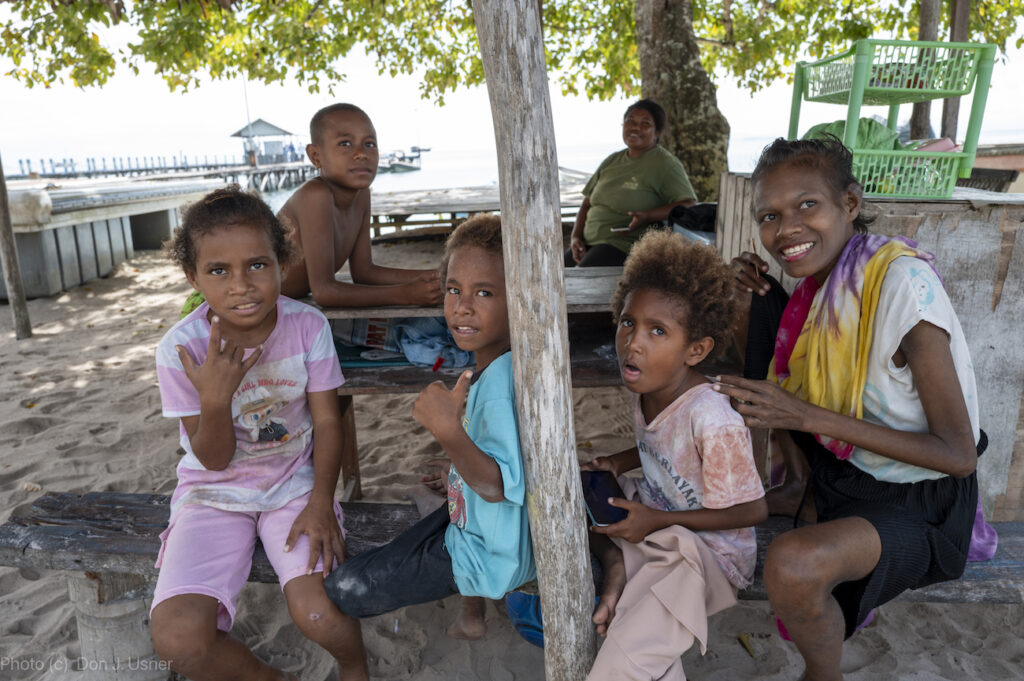
Many of our guests imagine “The Last Paradise on Earth” exactly as the internet and social media show them: turquoise lagoons, limestone karsts, and reefs overflowing with life. However, when they finally touch the shoreline of Sauwandarek and Yenbuba, they discover something entirely new.
Beyond the world-famous Raja Ampat diving, guests sailing with Jakare discover a quieter kind of magic just above the water line. As our boat gets closer to the shore, we get to witness how the people who call these remote islands home live in perfect harmony with the ocean.
Their days are guided by the tides, their food comes from the reefs, and their traditions are built on a deep respect for nature. Through the lens of our guest (and also a photographer), Don J. Usner, the true spirit of Raja Ampat’s local communities comes right into focus.
For a broader geographical and cultural overview of the region, explore our Raja Ampat destination page.
Where Are Sauwandarek & Yenbuba Village?
Sauwandarek and Yenbuba are located in the Dampier Strait area of West Papua, Indonesia, just two of the 1,800 islands that sit in the heart of the Coral Triangle. These gems are highly requested in many Raja Ampat itineraries because of their white sand, bright turquoise water, and reef-rich coastlines boasting shallow coral gardens.
To get there, we sail from Waisai, the main town and gateway to the region. The trip across the Dampier Strait takes about 4 hours, depending entirely on the mood of the tides and the weather that day.
Raja Ampat’s beauty is inseparable from the communities that live there
For divers and snorkelers, this area is famous for vibrant reefs and abundant fish life. Yet, for the people who live here, it is simply home, a place of ancestry, identity, and continuity. The landscapes our visitors admire are not untouched wilderness; rather, they are cultural seascapes shaped by generations of local stewardship.
Fishing grounds, reef areas, and coastal forests have long been managed through customary knowledge passed down within families. The beauty of Raja Ampat exists not in isolation from its people, but in a deep relationship with them. Stepping onto the shore is not just a village visit; it means stepping into someone’s daily life.
Daily Life in Sauwandarek & Yenbuba Village
Coastal life and family rhythms
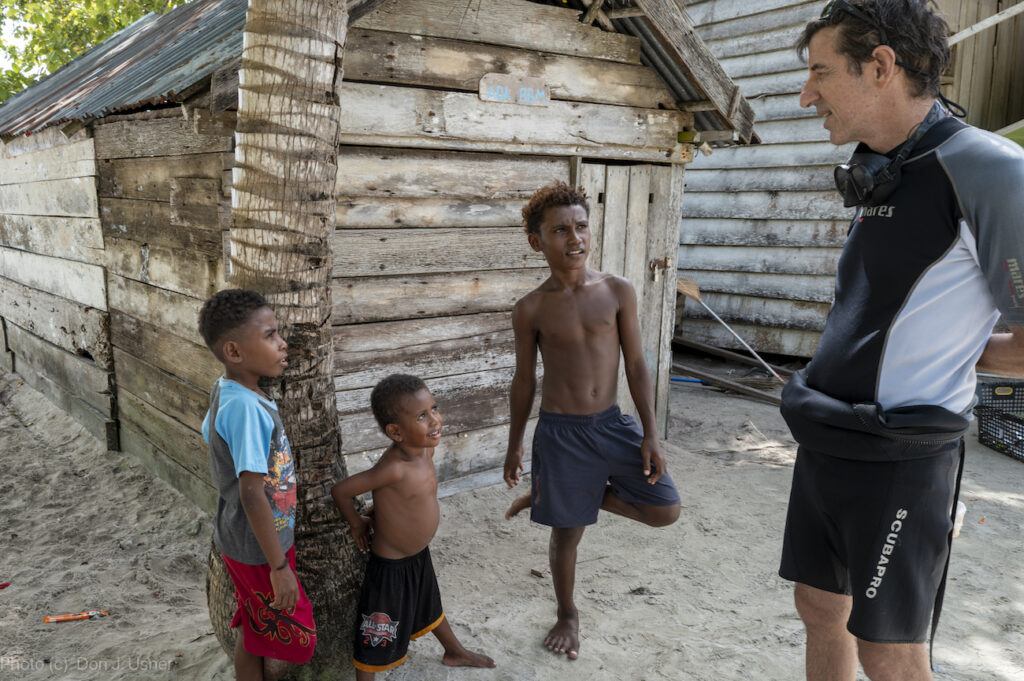
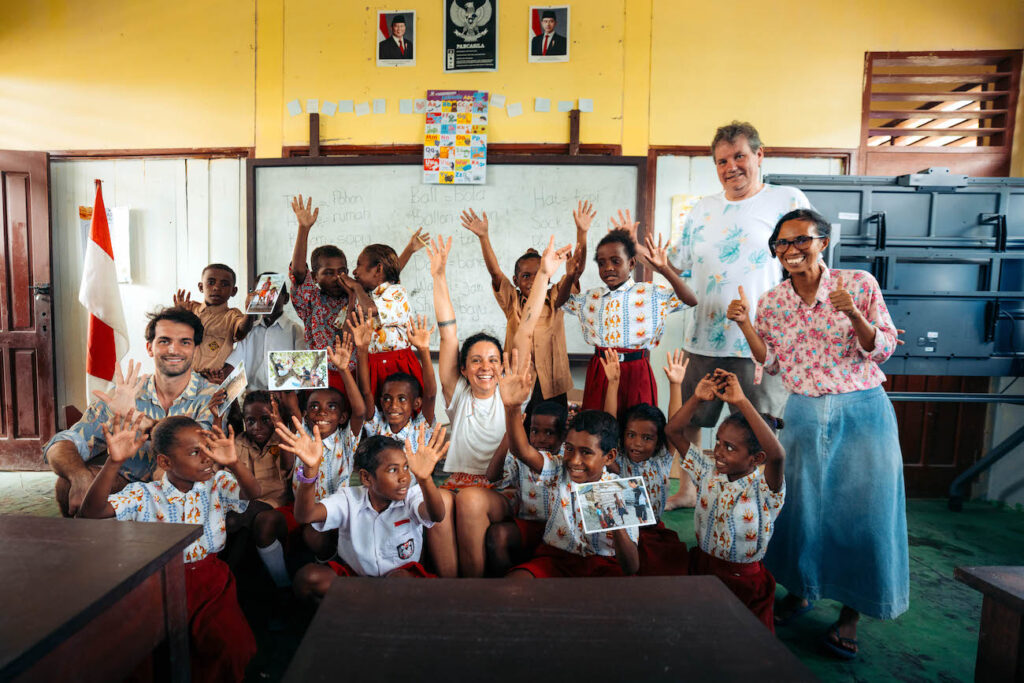
As our anchor drops near the jetty of Sauwandarek Village Raja Ampat, the warmth of the community reaches the boat before anyone even steps on land. Joyful children with wide, curious eyes wave excitedly from the wooden pier, their laughter echoing across the coastline. Wandering through the village, our guests feel deeply honored.
Just a short distance away on our route is Yenbuba Village Raja Ampat. This community stands as a beautiful example of how people and nature can live together perfectly.
The jetty here has some of the most amazing shallow-water marine life but seeing how much the villagers care about protecting their ocean backyard is just as inspiring to our crew and guests.
They share stories about starting their days early, often with fishing or preparing food. As afternoons soften into shared conversations, net-mending, laughter, and community gatherings, you realize that while electricity may be limited, human connection is wonderfully abundant.
One of the most admirable stories about the children here: life in Indonesia’s remote islands doesn’t stop them from pursuing their dreams. Every morning, local children from smaller islands canoe across the sea to reach their desks. Their commitment to education is as steady as the tide.
For the older kids, education means a week-long stay in the city of Sorong, far from their villages. It’s a quiet kind of bravery, leaving home young, all for the love of learning, and counting down the days until they can sail back home for the weekend.
Relationship with the sea
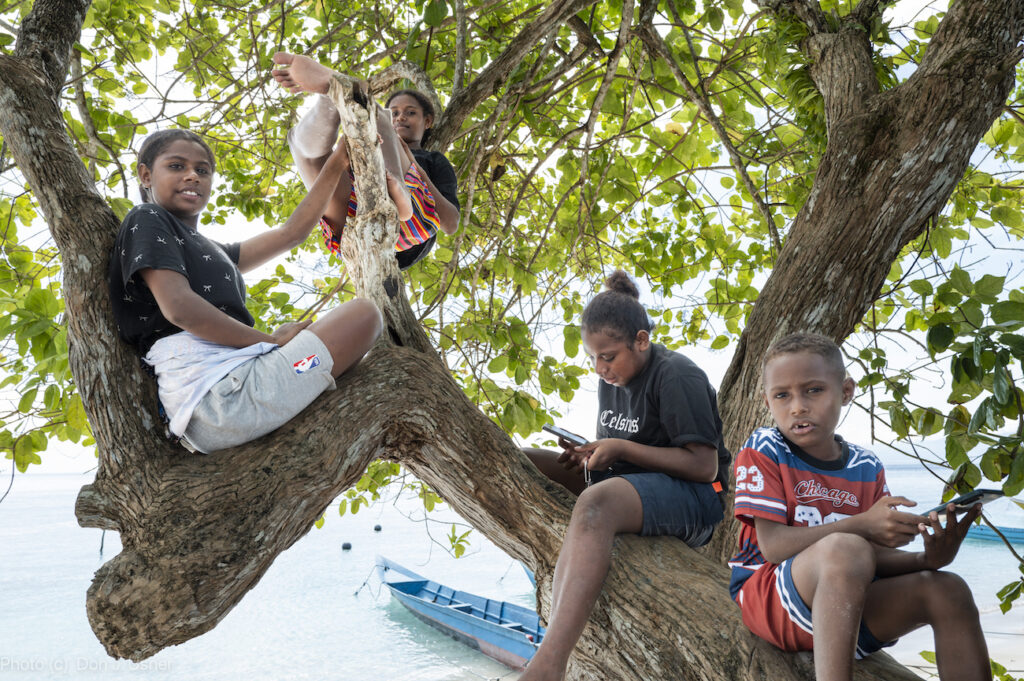
For many travellers, the sea might just mean a few days of vacation, but for the villagers, the sea is a pantry, a pathway, and a teacher. They learn about currents, tides, and seasons simply by observing the water. It is a profound knowledge you cannot learn in a classroom, it is gained from experience since a very young age and passed down directly to their kids and grandkids.
This knowledge is not written, it is observed, practiced, and embodied. The reef is understood not only as an ecosystem but as a living partner in survival and wellbeing. For visitors who dive or snorkel nearby diving spots, the marine abundance is breathtaking. For the villages, that abundance is directly tied to food security and generational continuity.
Intergenerational presence (children, elders, shared spaces)
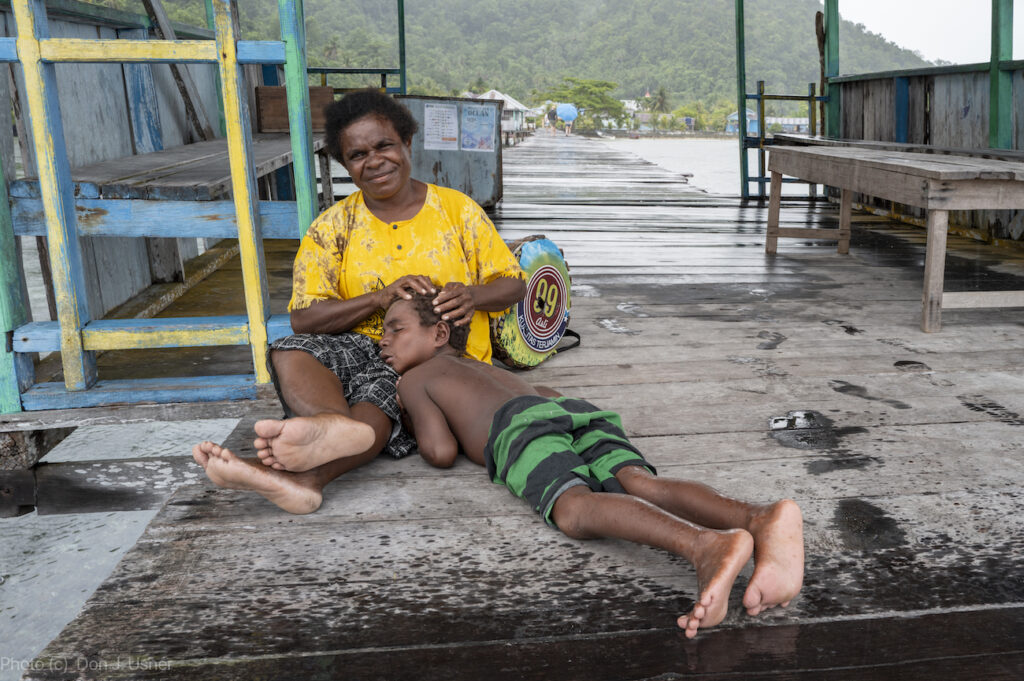
What has always surprised us while walking along the sandy alleys of these villages is how beautifully all ages mix. In both Sauwandarek and Yenbuba, generations share space seamlessly. Elders carry the stories and memories, while adults maintain daily life and make community decisions.
Children grow up with a strong sense of belonging, going to school while adults take care of their families, fish, or work in tourism. This continuity is visible everywhere, in shared meals, communal work, and the way knowledge passes naturally from one generation to the next.
Why protecting reefs also means supporting communities
Conservation cannot exist without community inclusion.
Protecting reefs while ignoring the people who depend on them creates an imbalance. True sustainability means supporting livelihoods, respecting local authority, and recognising that environmental and cultural preservation are deeply intertwined.
We always encourage our guests to look at the ocean through this exact same lens. To support conservation like the locals, do, we must remember that every time we slip into the water, we are not just exploring a dive site, we are entering their ancestral home and primary source of life.
Supporting conservation here goes beyond simply watching your buoyancy or minimizing plastic waste; it requires traveling with intention. It means actively supporting the village economy, whether by purchasing handmade local crafts, respectfully engaging with local guides, or simply choosing a mindful operator that prioritizes local inclusion.
Responsible Travel in Raja Ampat
What does responsible travel mean in a remote region
Practicing responsible travel in Raja Ampat takes on a much deeper meaning when you realize just how isolated this paradise truly is. In a region this remote, every single visit leaves a footprint. The daily logistics of survival are demanding, supplies must be transported across vast stretches of ocean, and waste management presents a deeply complex challenge for these island communities.
But beyond the physical environment, cultural sensitivity is the true cornerstone of any journey here. For us, responsible travel means intentionally slowing down our pace, taking the time to truly listen to the locals, and always recognizing that we are stepping into someone’s beloved home.
The impact of respectful visitation
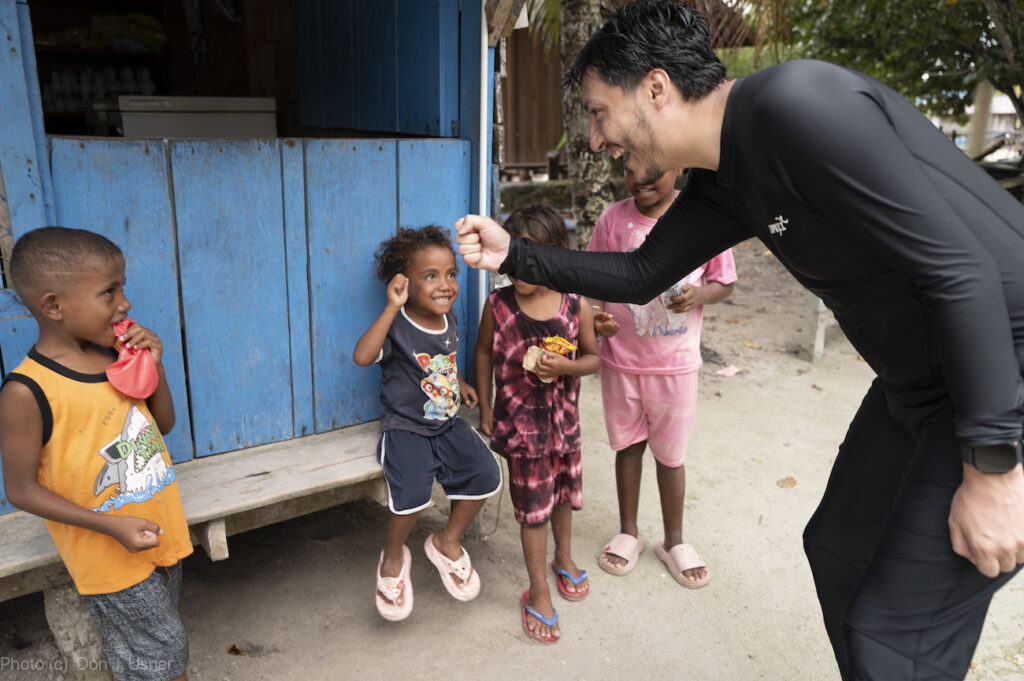
We always remind our guests that the impact of a respectful visit cannot be overstated. Simple, mindful actions matter immensely. Taking a moment to ask for permission with a warm smile before lifting a camera, dressing modestly while wandering through the village pathways, and choosing to support the community by purchasing beautiful local crafts all create ripples of goodwill.
When we approach these encounters with genuine curiosity rather than a sense of entitlement, the exchanges shift completely. They stop being mere tourist transactions and change into profoundly human connections.
Long-term presence vs short-term tourism
There is a stark contrast between the fleeting rush of short-term tourism and the enduring commitment of a long-term presence. While rapid tourism often extracts value from a destination, consuming its beauty with little left in return, Jakare chooses a different path.
We prioritize a long-term presence to build a foundation of trust rooted in a shared vision of sustainability; one that respects the earth, the ocean, and the people dedicated to their preservation. By returning to these same shores season after season, our crew has developed deep, lasting relationships with local communities.
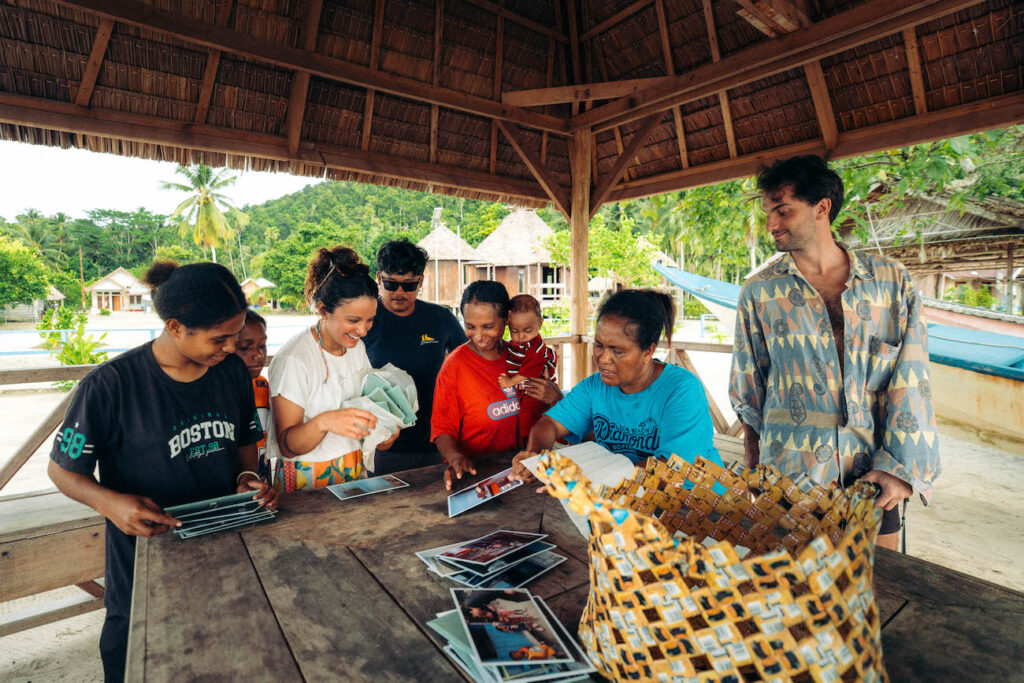
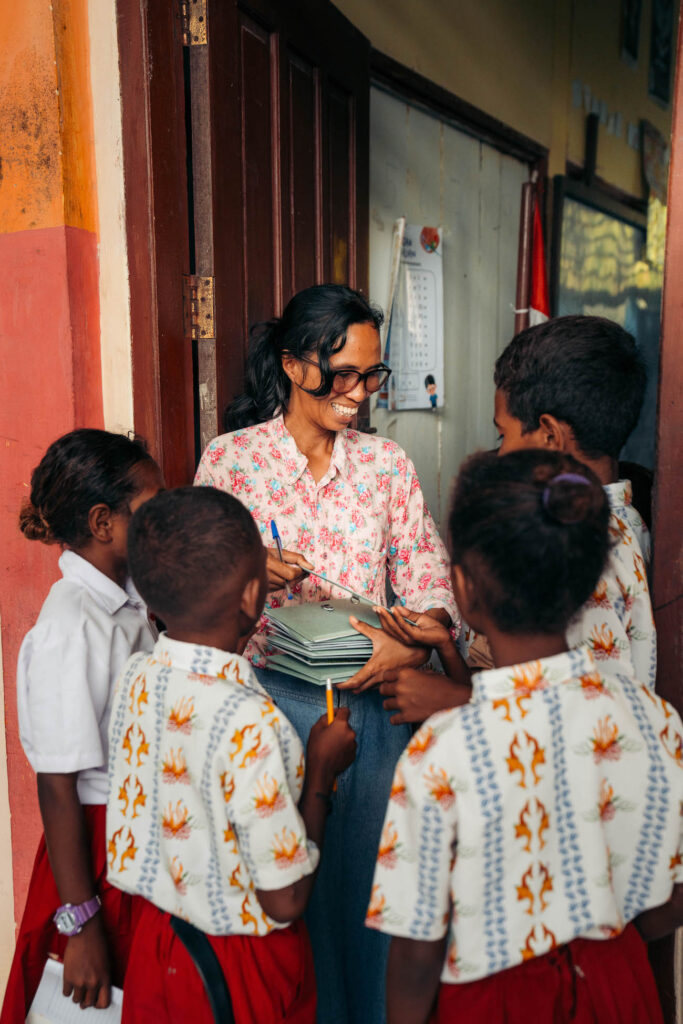
As a gesture of admiration and gratitude for their warm hospitality, Jakare recently collaborated on a special project with Don J. Usner. To thank the villagers for graciously allowing our guests to capture glimpses of their daily lives, we embraced Don’s idea of giving back. Jakare facilitated the printing of these photographs, which we are hand-delivering to the community during our next voyages.
These photos of villagers happily receiving their prints were taken by Robin Lecoutre, a professional photographer and fellow guest who wanted to engage with the incredible community of Raja Ampat.
Through such initiatives, we hope to foster a cycle of accountability, mutual understanding, and shared benefit, ensuring these villages thrive alongside the travellers they welcome.
Exploring Raja Ampat with Awareness
Exploring Western Papua with awareness fundamentally transforms the entire journey. Raja Ampat is so much more than just another bucket-list destination; it is a breathing, living region woven from rich culture and staggering biodiversity.
When you sail with this mindful approach, the goal of your trip beautifully shifts. It is no longer just about ticking off new dive sites to fill up your dive log or simply chasing sightings of manta rays and colourful reefs. Instead, you begin to truly witness and appreciate the delicate, intricate web of human and marine life that sustains this extraordinary place.
Sailing with Respect: Jakare Liveaboard’s Perspective
Operating in Raja Ampat with cultural awareness
Operating in such a remote and pristine region is a privilege we do not take lightly. At Jakare, our presence is rooted in cultural awareness and long-term engagement. We return to the same regions season after season, building familiarity and trust. We do not see village visits as mere attractions, but as encounters that require humility.
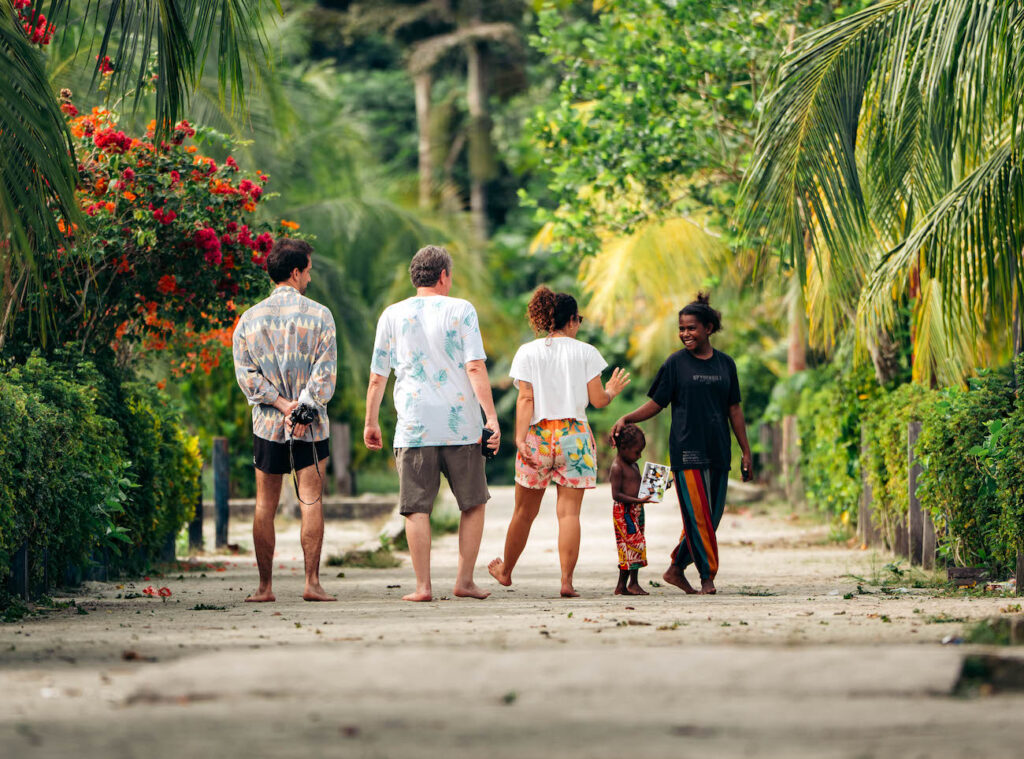
Our approach is not based on charity, but on relationships, showing up consistently, behaving respectfully, and understanding that our work depends entirely on the health of both the reef and the community.
There is truly no better way to string these amazing village experiences together than from the deck of our traditional wooden boat. Welcoming guests aboard a Jakare liveaboard turns the whole adventure from a basic trip into a moving, floating story.
What Travellers Support by Visiting Raja Ampat Responsibly
Drifting through these waters on a Jakare yacht charter provides unparalleled freedom while ensuring our travel choices have a positive consequence. Choosing a mindful operator means supporting practices that prioritize marine protection, cultural respect, and local inclusion. It means understanding that your journey contributes to the future of the region.
In Raja Ampat, you are not simply consuming an experience, you are entering a living ecosystem of people and the sea. Traveling as a guest rather than a consumer is exactly what allows this extraordinary place, and the beautiful communities of Sauwandarek and Yenbuba, to continue thriving for generations to come.
For travellers who wish to explore Raja Ampat while respecting the people who call it home, direct enquiries to Jakare contact will help ensure journeys are planned thoughtfully and responsibly.
FAQ
- Are Sauwandarek and Yenbuba Village open to visitors year-round?
Village visits are generally possible year-round, though accessibility and activities may vary depending on weather and local schedules. - Do visitors need permission to enter local villages in Raja Ampat?
Yes. Visitors are expected to follow local protocols, which may include prior coordination or guidance from local hosts or operators. - Can travellers interact directly with villagers during their visit?
Interaction is possible in shared spaces, but visitors are encouraged to be respectful, observant, and mindful of daily routines rather than intrusive. - How can I enquire about a trip to Raja Ampat with Jakare Liveaboard?
All trips are handled via direct enquiry, allowing itineraries, travel dates, and preferences to be discussed before confirmation. - Are visits to local villages included in Raja Ampat itineraries?
Village visits may be included depending on the route and conditions, and are approached respectfully in coordination with local communities. - What is typically included in a Jakare Liveaboard trip?
Trips generally include accommodation onboard, meals, planned activities, and guided experiences, with details confirmed during the enquiry process. - How far in advance should I book a Raja Ampat liveaboard?
Due to limited departures and high demand, enquiries are recommended several months in advance, especially during peak season.
Read More