


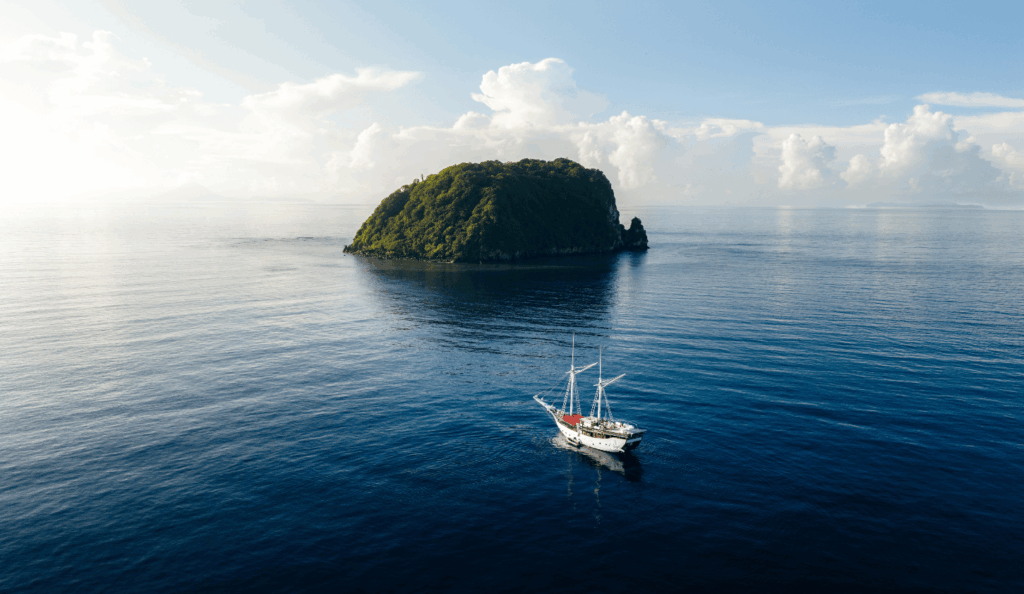
Banda Islands once become the epicenter of spice trade in the world circa 16-17th century. Now, it remains one of Indonesia’s most spectacular and remote diving frontiers. Banda Islands offering a striking blend of volcanic underwater topography, immense pelagic life, and pristine coral reefs.
Because of its remote location, navigating this region requires expertise and a deep understanding of its dynamic currents and seasonal shifts. Audrey, the Cruise Director of the Jakare Liveaboard, has spent extensive time exploring these waters.
With an intimate knowledge of the region’s marine ecosystems and the behavioral patterns of its inhabitants, she offers a definitive guide to the area’s most exceptional underwater landscapes. Here is Audrey’s version of best dive sites in Banda Islands.
History of Banda Sea
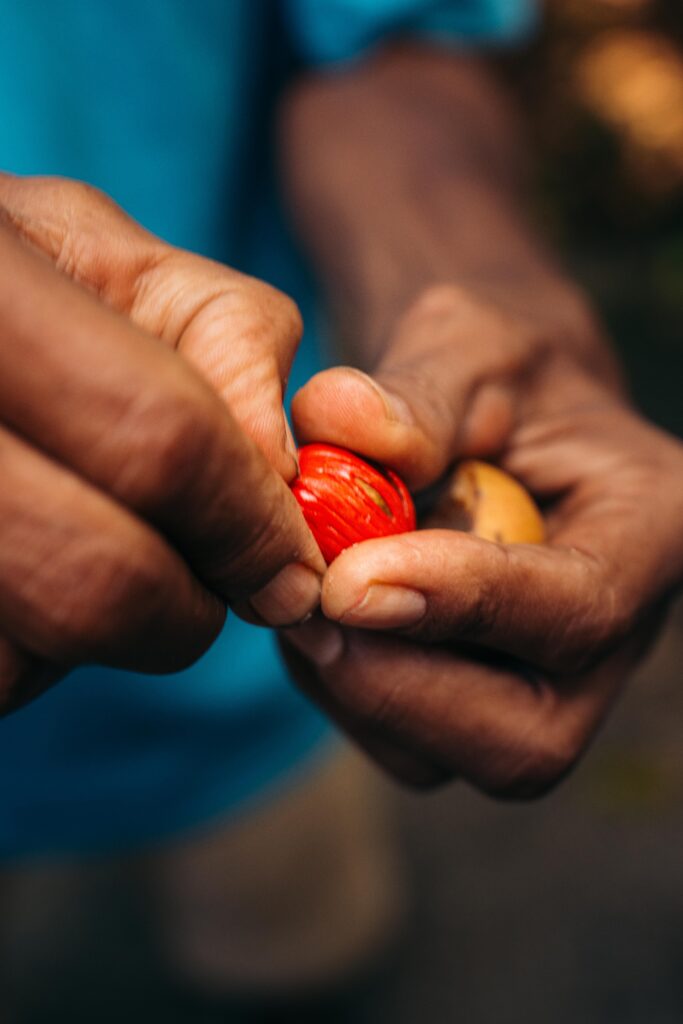
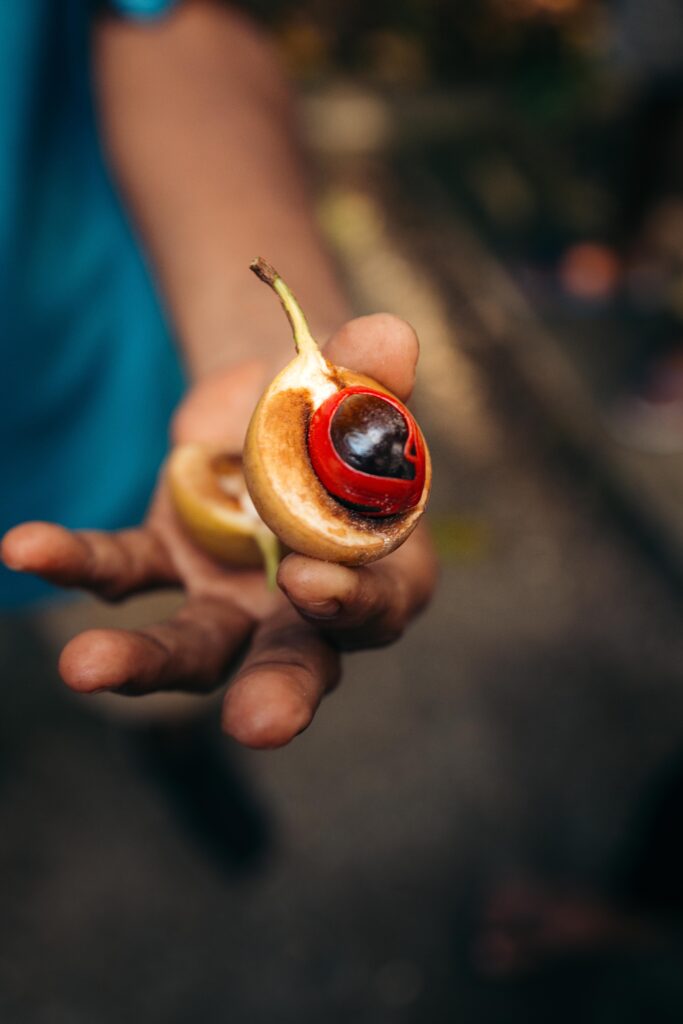
Many first-time visitors often ask, “Why are the Banda Sea islands called the Spice Islands?”. The answer is, long before it became a bucket-list destination for diving, it was the epicenter of global maritime trade. This remote islands were once the world’s sole source of nutmeg and mace.
Throughout the 16th and 17th centuries, these heavily sought-after commodities triggered intense colonial conflicts between the Portuguese, Dutch, and British empires.
The Dutch East India Company (VOC) ultimately established a ruthless monopoly over the region, which culminated in the 1667 Treaty of Breda. It is a historic agreement where the British ceded control of the tiny Bandanese island of Run to the Dutch in exchange for the distant North American settlement of New Amsterdam, which is now Manhattan.
Today, the remnants of ancient forts and colonial architecture above water offer a stark contrast to the thriving, undisturbed ecosystems below.
What’s Makes Banda Sea Unique?
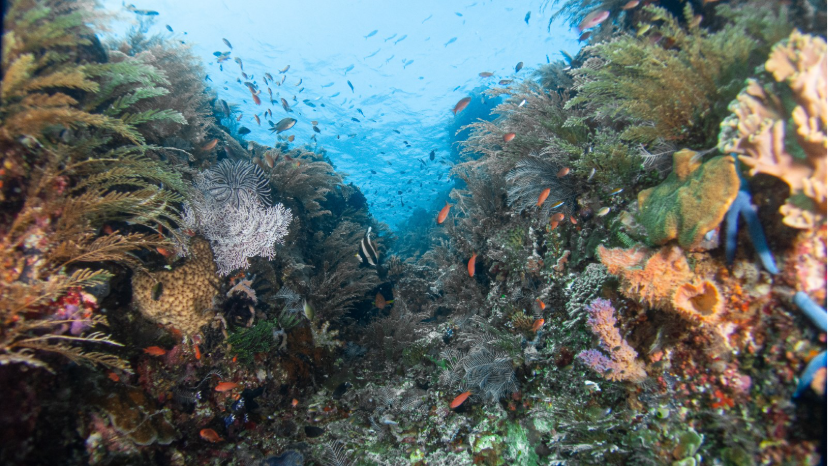
As a part of the Coral Triangle, the underwater scene of the Banda Sea is absolutely amazing. The unique geological makeup creates an environment that is perfect for exploration. Here are 4 reasons you should experience Banda Sea diving:
Deep Water Upwellings
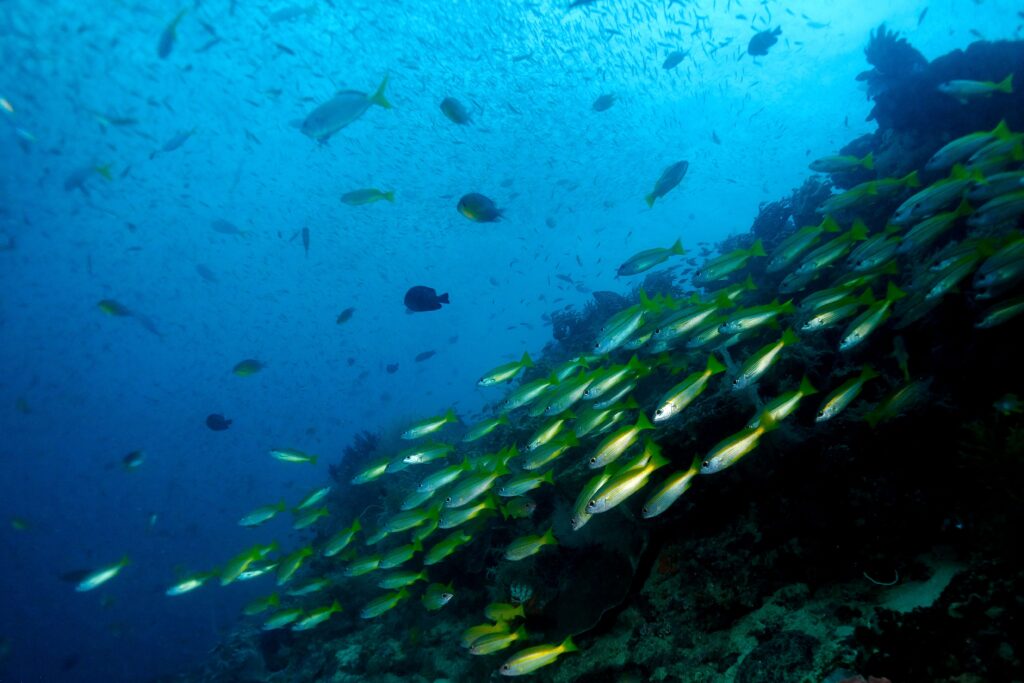
Plunging to depths of over 7,000 meters in the Banda Trench, the sea features massive upwellings of cold, nutrient-rich water. This fuels an explosion of biomass and supports massive schools of pelagic fish.
Ring of Fire Volcanism
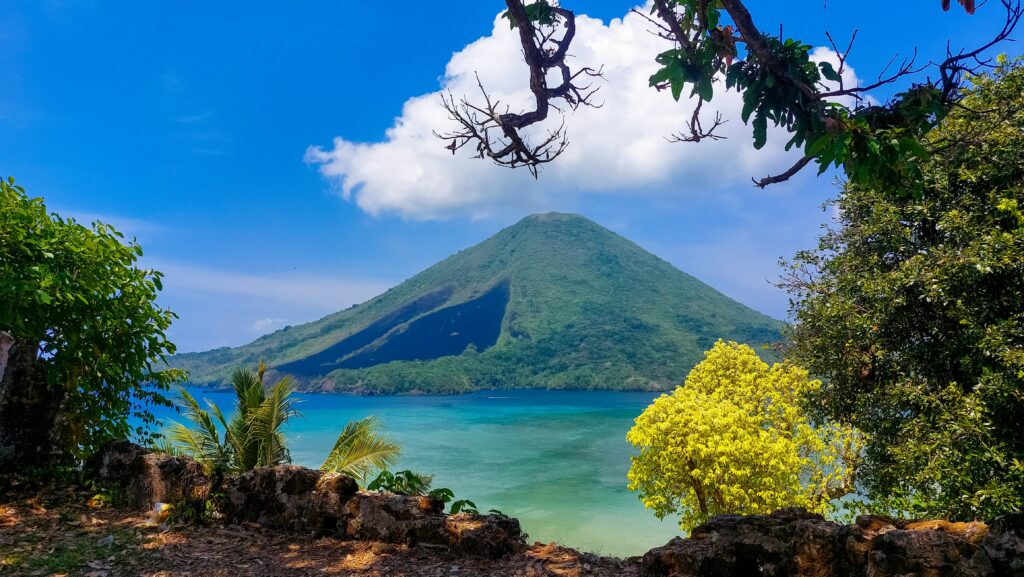
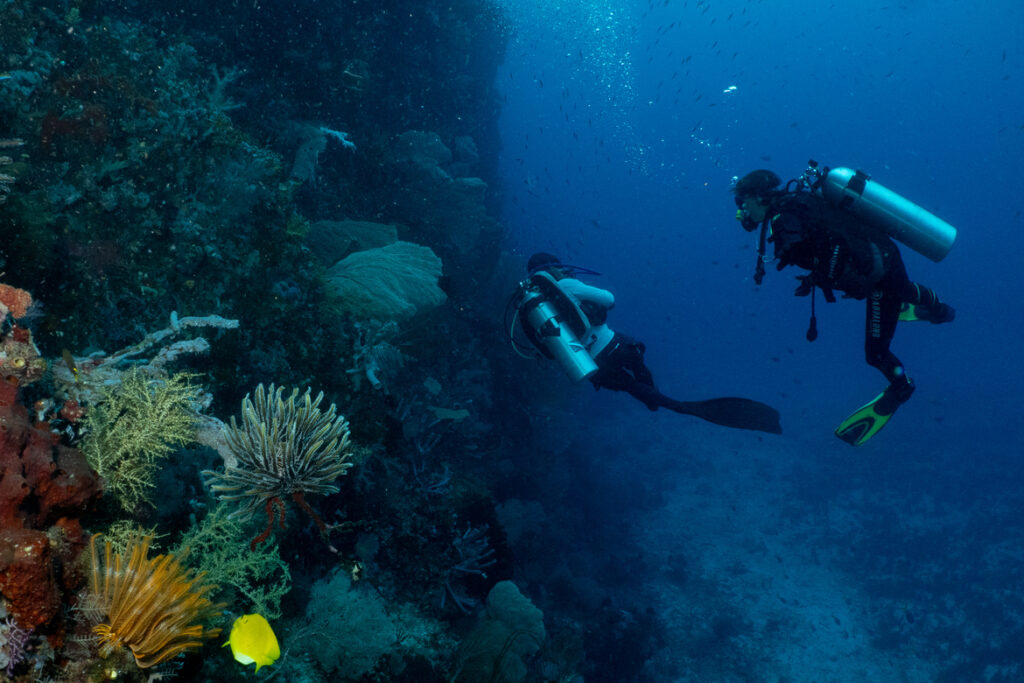
The region is dotted with active and dormant volcanoes rising straight from the abyss. This creates unique underwater features like sheer drop-offs, black sand slopes, and sulfur-tinged rocks, providing the perfect foundation for extensive coral growth.
Hammerhead Migrations
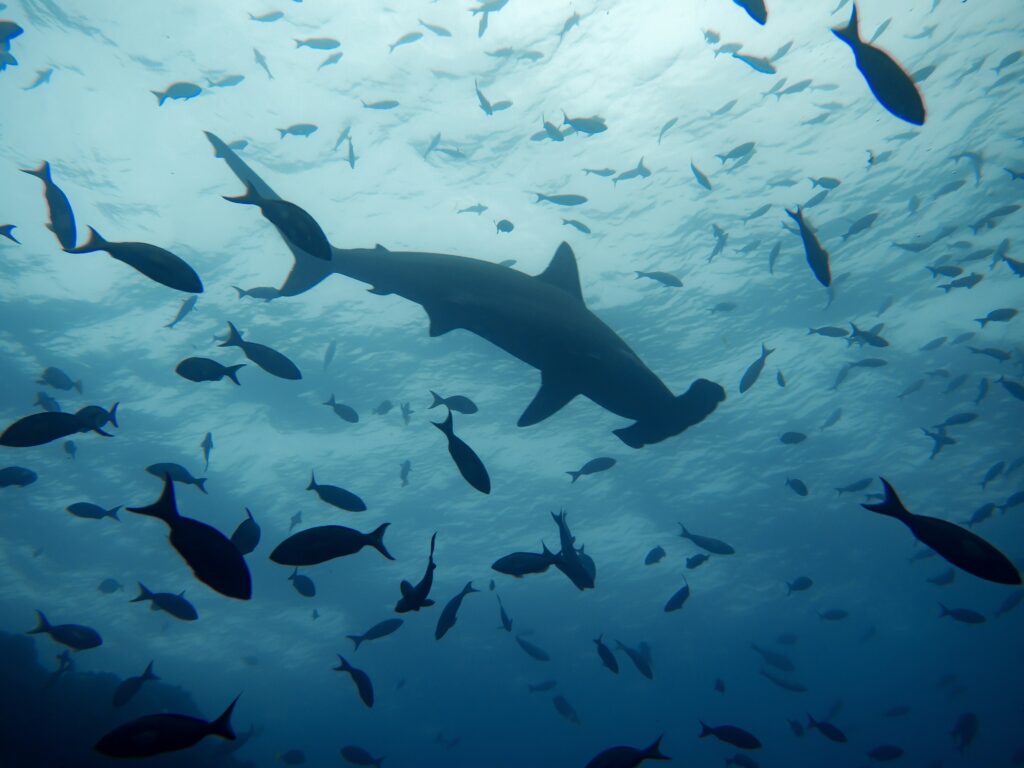
The deep thermoclines, where water temperatures can plummet abruptly, serve as a magnet for schooling scalloped hammerhead sharks, which are frequently spotted cruising along the deep pinnacles and sandy slopes.
Endemic and Rare Species
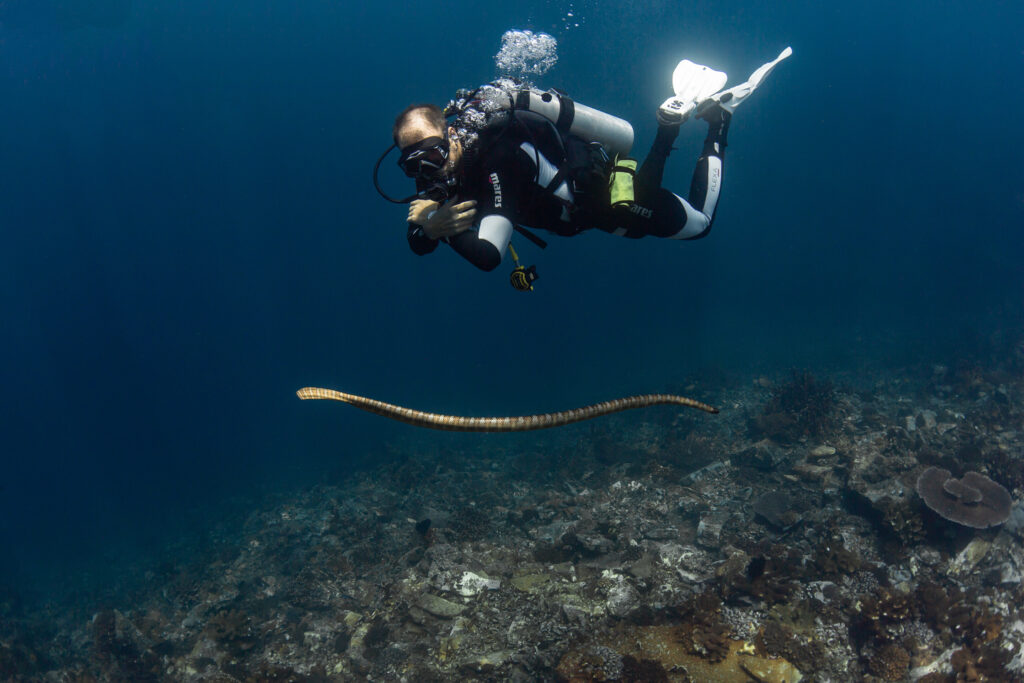
From vast colonies of sea snakes to unique macro life hiding in the volcanic sand. The biodiversity in this area ranges from the microscopic to the massive.
Best Dive in Banda Sea: Audrey’s Preferred
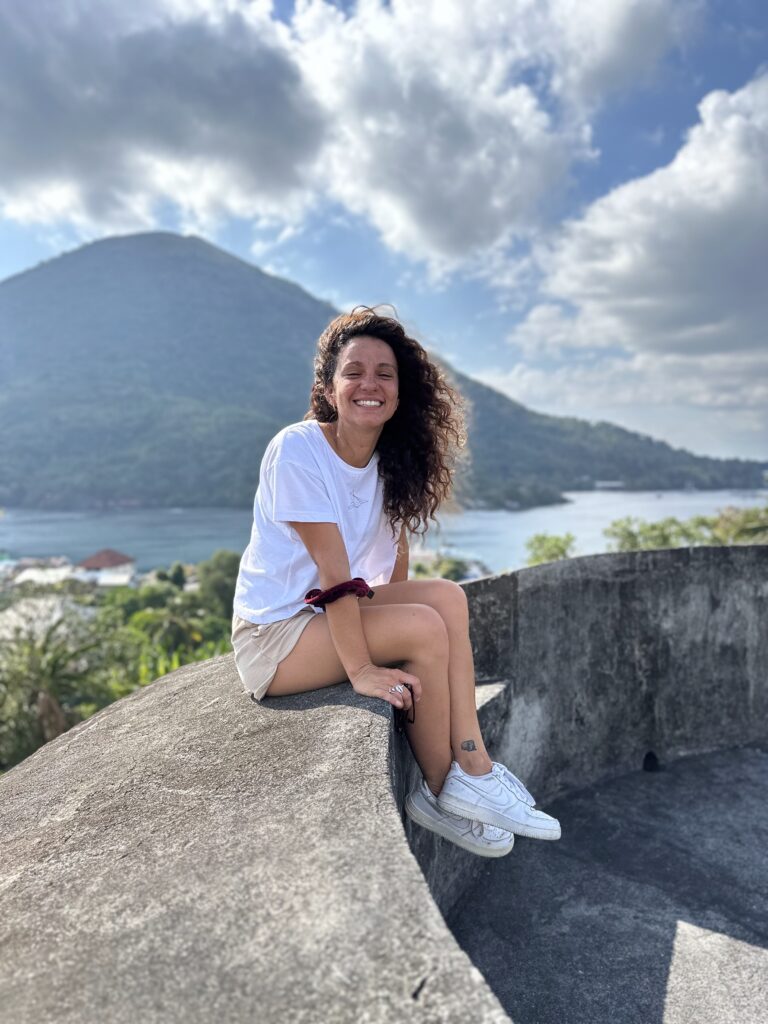
Audrey always comes with three top recommendations when people ask which sites are best for Banda Sea diving: Batu Kapal, Suanggi, and Manuk. Divers reach them via a Banda Sea liveaboard from Banda Neira, often starting their Banda Neira diving journey before heading out to find hammerhead sharks, dramatic pinnacles, and black sand volcanic slopes. Here’s the breakdown about those three best dive sites in Banda Sea.
Batu Kapal – The Underwater Canyons and Valleys
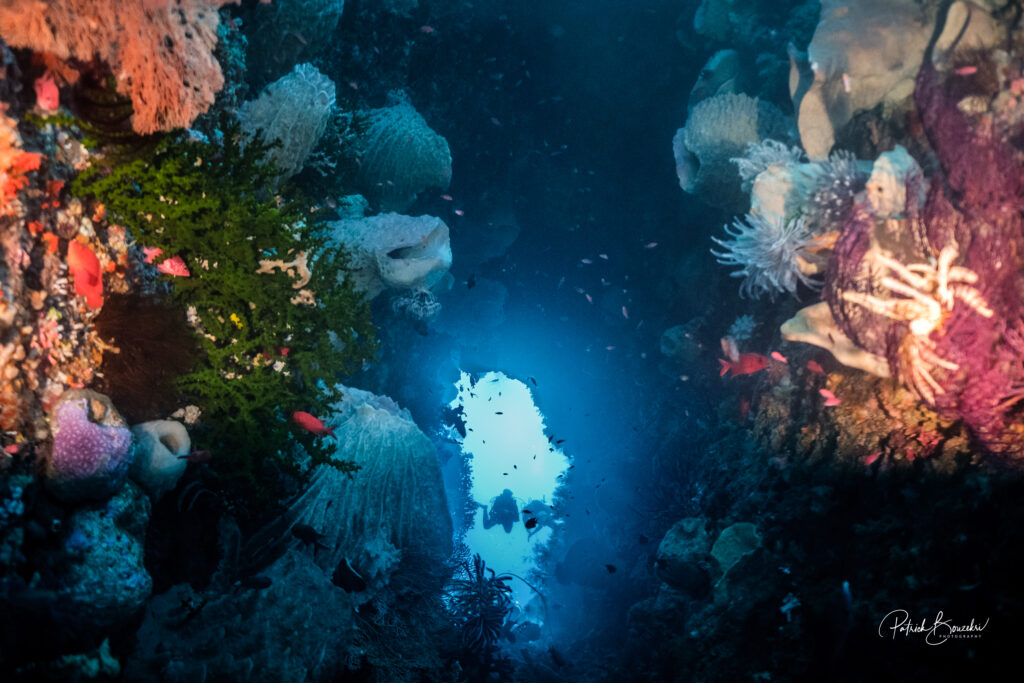
Located just a short, 30-minute boat ride north of Banda Neira, making it an accessible highlight for Banda Neira diving, Batu Kapal is an expansive site dominated by an underwater mountain and a shallow plateau. The site features a bridge-like structure between the main mountain and a 20-meter pinnacle, reminiscent of Komodo’s Crystal Rock.
The topography is diverse, featuring massive canyons and valleys resting at 30 meters deep. Divers can expect to swim through an “aquarium of red-toothed triggerfish” in the shallows, while hammerheads frequently patrol the 40-meter depths below. The site is incredibly vast, allowing for dozens of unique Banda Sea diving experiences depending on the currents.
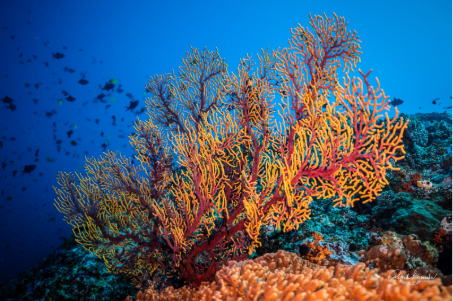
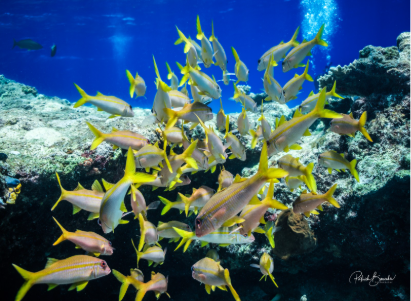
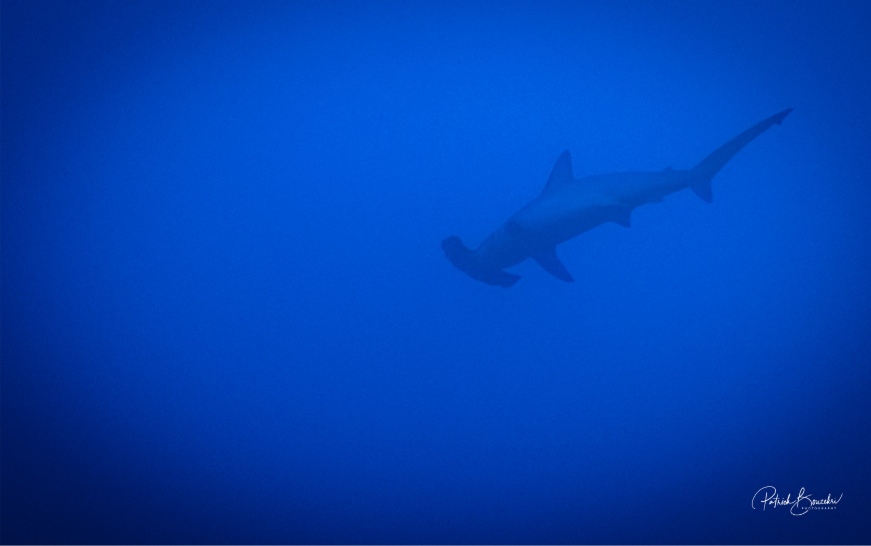
“Basically, the barrel sponges make something like smoke, like a cauldron in Harry Potter. Exactly the same. And so, they make a lot of smoke, etc., and it disperses into a blue. It’s crazy,” Audrey, describing the October-November barrel sponge spawning at Batu Kapal.
Suanggi – The Pelagic Wonderland
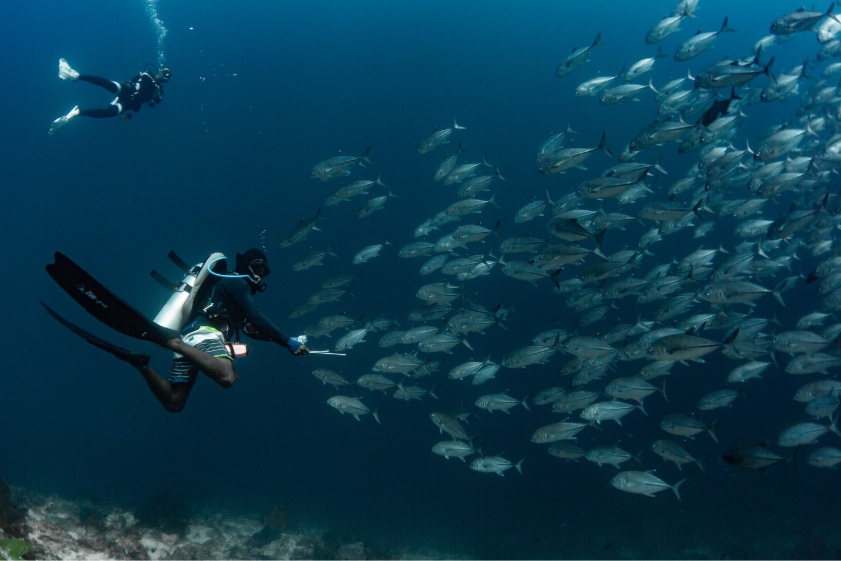
Situated three hours north of Banda, the small island of Suanggi is a bird reserve above the surface and a pelagic wonderland below. The underwater landscape ranges from a sweeping sandy slope with incredible visibility to dramatic pinnacles that drop from 18 meters down to 50 meters.
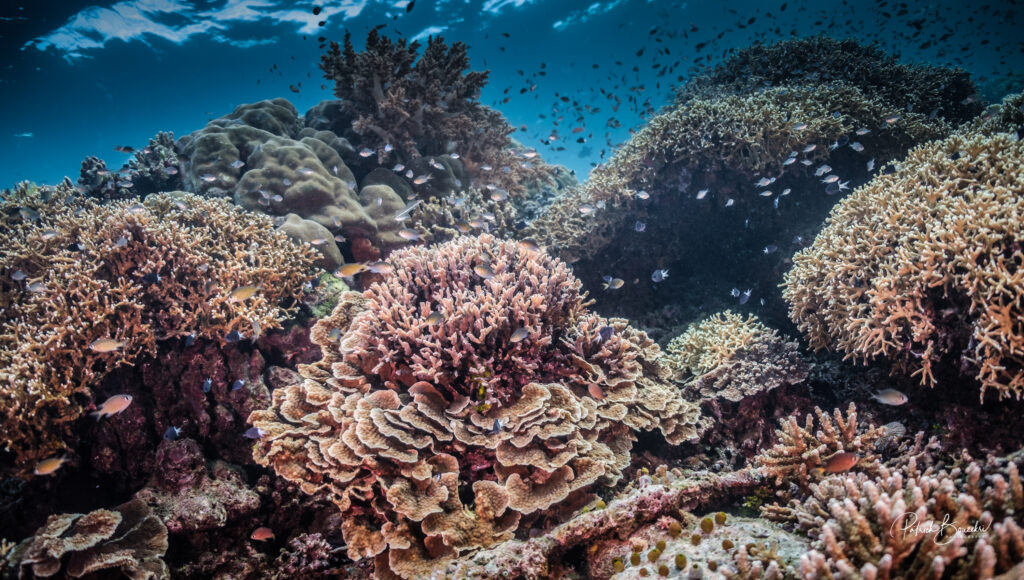
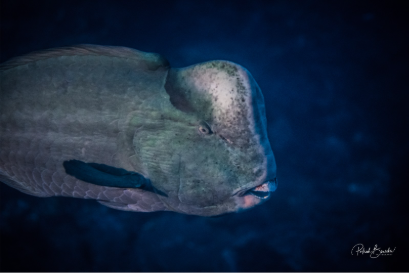
The area is heavily populated by cabbage and staghorn corals, serving as a backdrop for massive encounters with dogtooth tuna, Napoleon wrasse, and bumphead parrotfish. The massive thermoclines here, dropping up to four degrees over just ten meters, are the primary draw for hammerhead sharks.
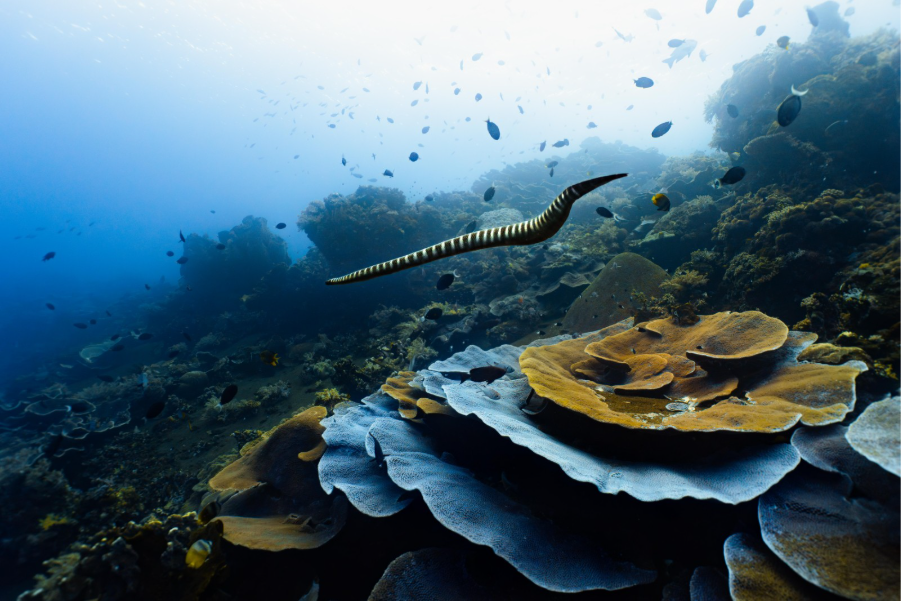
“The banded sea kraits use divers as protection to go back up to breathe, because snakes breathe like turtles on the surface. And so in fact since they are smart, their predator is birds. So, they come up at the same time as the divers, so the birds don’t come and attack them,” Audrey explains.
Manuk – The Snake Island
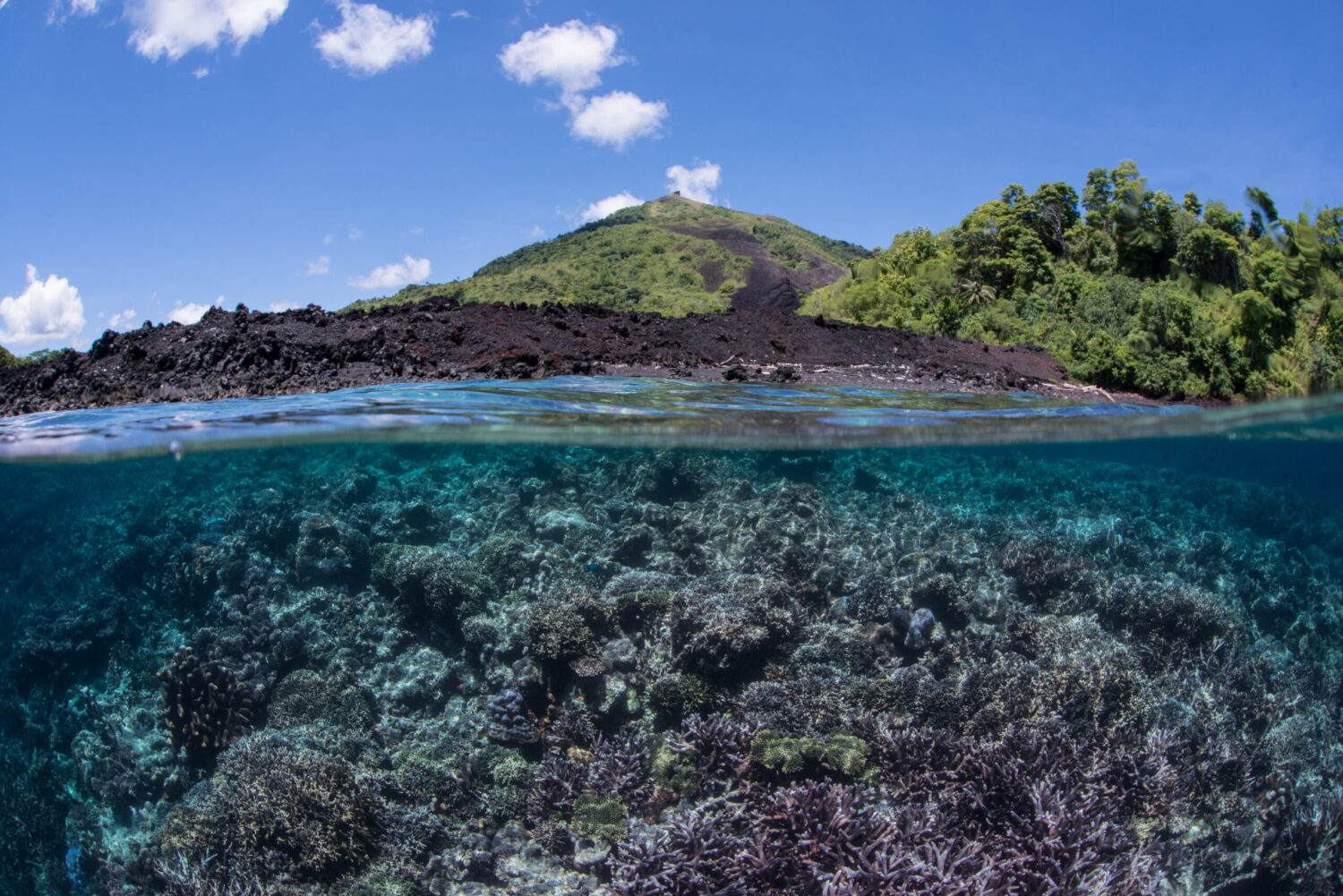
A ten-hour journey south of Banda brings divers to Manuk, an active volcano surrounded by sheer walls and expansive black sand slopes. Known as the “snake island,” the waters are teeming with curious olive sea snakes and banded sea kraits that follow divers toward the surface.
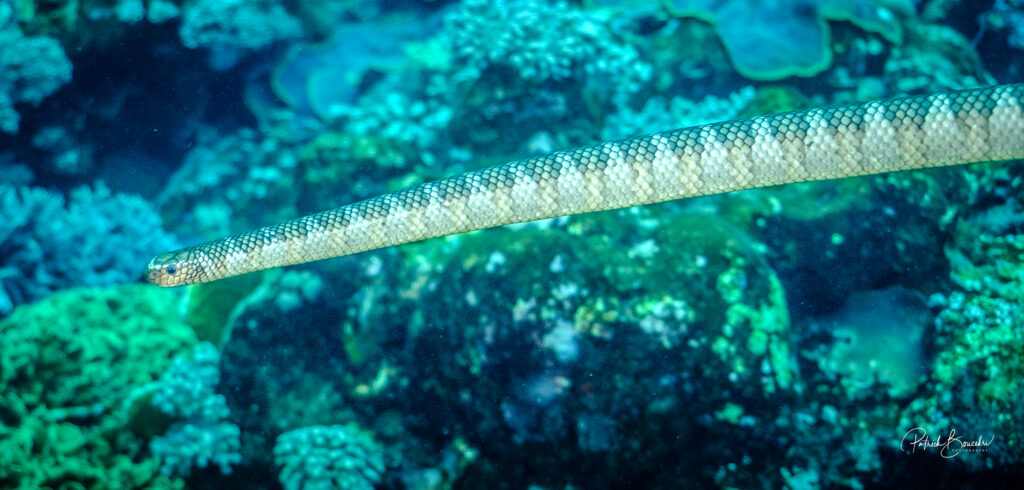
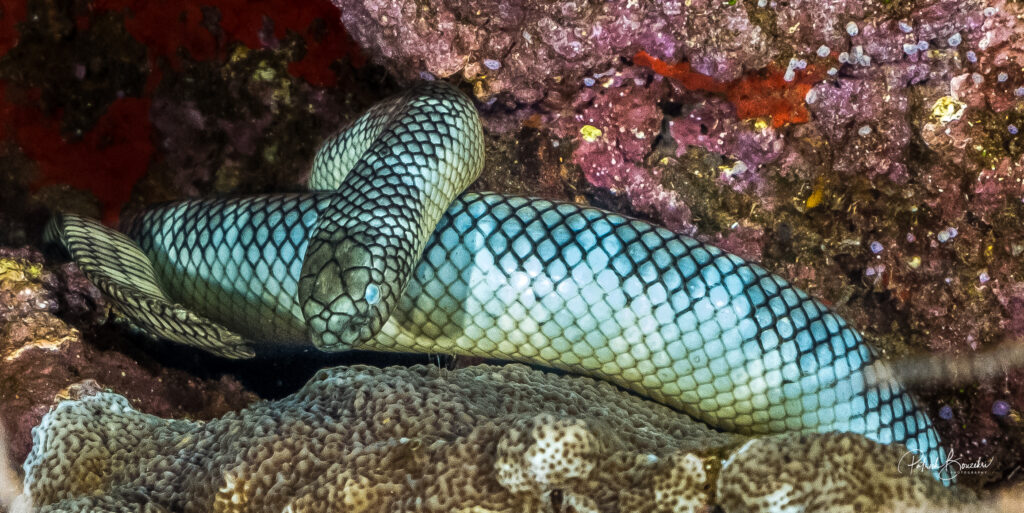
The southern dive sites often carry a distinct sulfur smell from the volcano, with the rocks tinted orange and green. While hammerheads are frequently spotted on the eastern and southern edges, the raw visual aesthetic of the reef is a true highlight of Banda Sea diving.
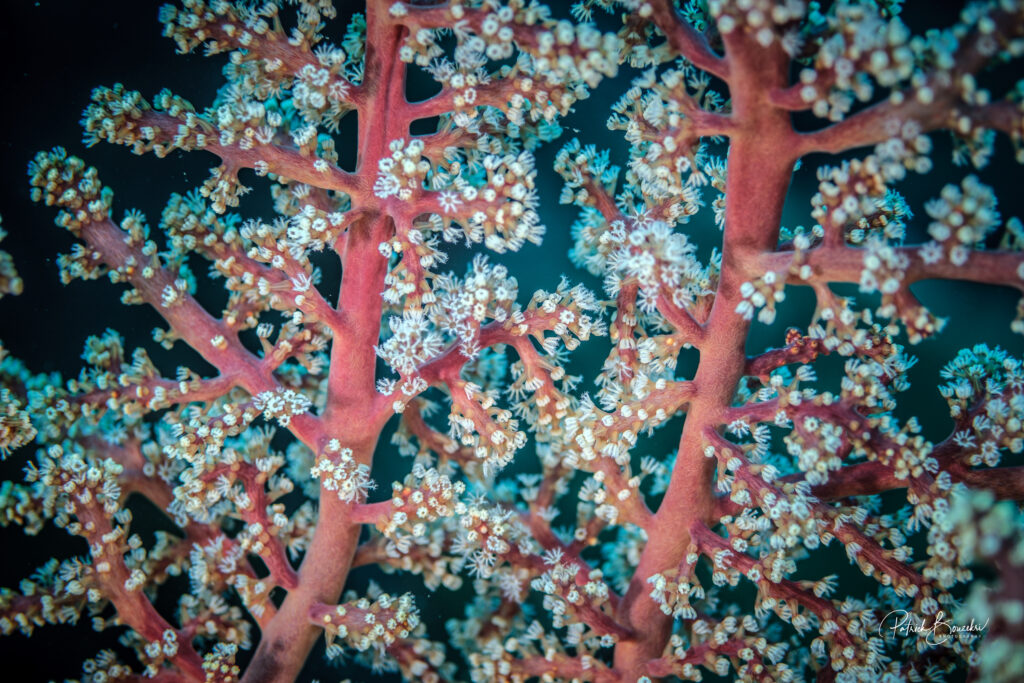
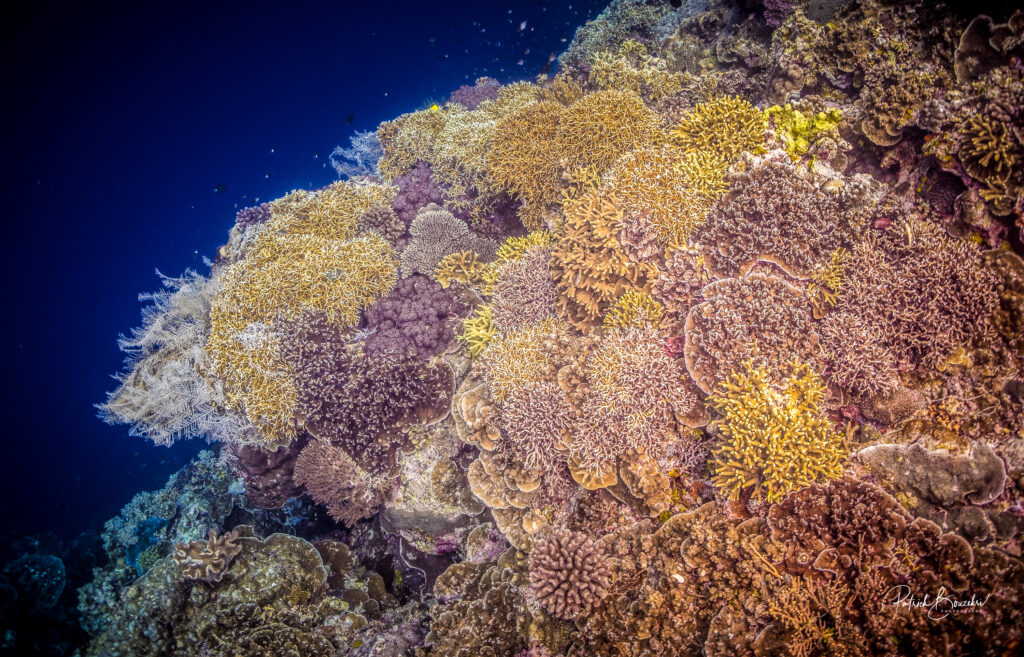
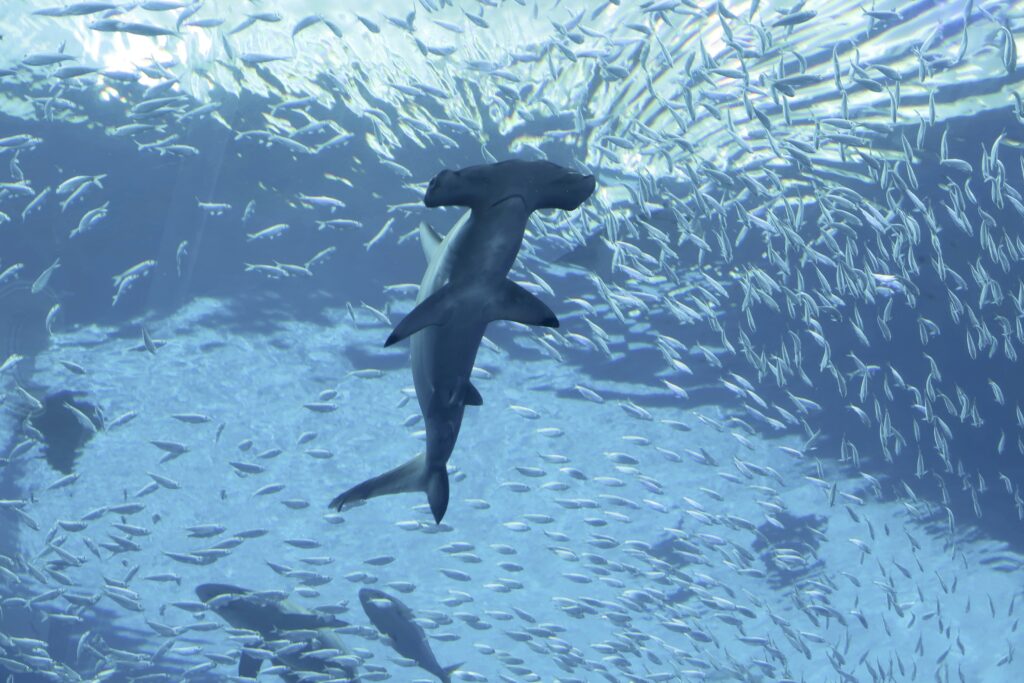
“You have 30 meters of visibility, 35 meters of visibility, and you have expanses of black sand for hundreds of meters. The contrast between the black, the pink-purple and the blue, it’s just wow!” Audrey remarks.
Banda Sea Dive Sites Comparison
| Dive Site | Distance from Banda Neira | Underwater Features | Marine Life | Main Highlight |
| Batu Kapal | 2-3 miles (30 minutes) | 20 m pinnacle and canyons at 30 m. | Hammerhead sharks at 40 m. | A distinctive pinnacle and canyon dive offering dramatic deep-water topography and great opportunities for big shark encounters. |
| Suanggi | 20.5 miles (2-3 hours) | Pinnacles from 18 to 50 m, deep walls, large coral formations, and huge pink barrel sponges. | Schooling scalloped hammerhead sharks, oceanic whitetip sharks, and other large pelagics. | A premier remote seamount dive famous for thrilling blue-water encounters and a severe thermocline that drops 4°C over 10 m. |
| Manuk | 76 miles (8-10 hours) | Sheer walls, black sand slopes, and active geothermal vents rising from the depths. | Enormous sea snake (sea krait) population, hammerhead sharks, snappers, and Napoleon wrasse. | Known as “Snake Island” for its massive reptile congregation, featuring 30 to 35 m visibility, underwater volcanic vents, and a seabird sanctuary. |
How To Visit Banda Sea
Because of its geographic isolation, world-class Banda Sea diving is exclusively accessed via liveaboard. The most common routes are long crossing trips that bridge the gap between Ambon and Sorong (Raja Ampat) or Maumere. Due to the exposed nature of the area, trips are highly dependent on calm weather windows.
The best times to visit are during the transitional monsoon periods, typically from from January to April and from July to December. These windows not only offer the calmest seas for the long overnight crossings. This period also align with the best chances to witness the hammerhead shark aggregations and unique events like coral and sponge spawning.
Book Your Banda Sea Trip with Jakare Liveaboard
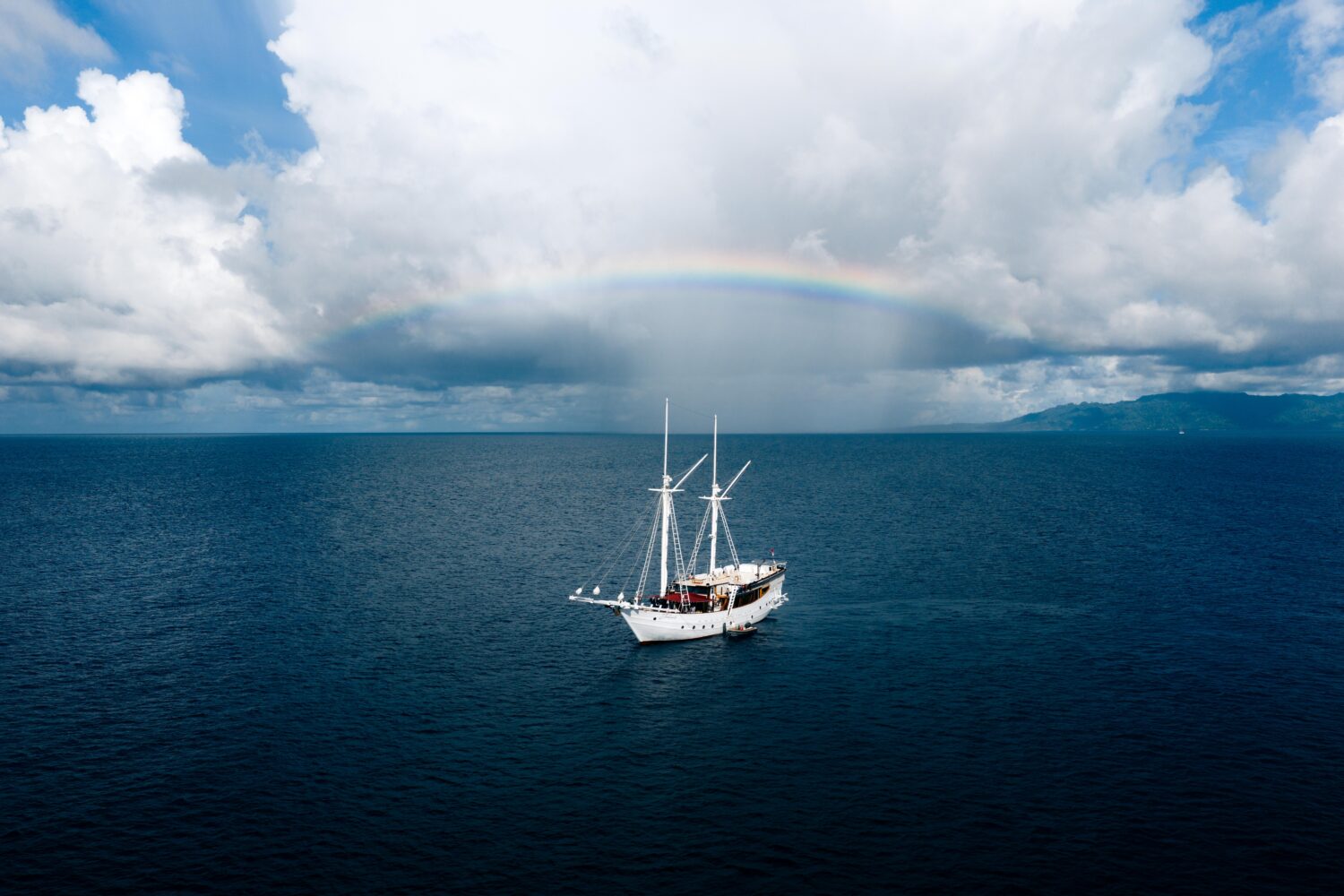
Exploring remote pinnacles, extreme thermoclines, and isolated volcanic islands requires a vessel built for serious Banda Islands diving. As a dedicated diving liveaboard, Jakare prioritizes the underwater experience above all else, ensuring that dive operations run seamlessly even in challenging, off-the-grid environments.
With expert guidance from cruise directors like Audrey, who understand the intricate currents and behaviors of the Banda Sea’s marine life, guests are positioned in the water at exactly the right time to experience pristine drop-offs, immense pelagic encounters, and legendary snake islands.
Good news for divers who looking for the next adventure beneath frontier waters. Jakare has scheduled the 2027 itineraries departing from Ambon, save the date!
- Ambon – Ambon: 15–24 October 2027
- Ambon – Sorong: 27 October–8 November 2027
Please note that our cabins fill up quickly, secure your spot today! Our dedicated team will be happy to curate the next thrilled diving liveaboard for you!
Frequently Asked Questions
They earned this name because they were historically the world’s only source of nutmeg and mace. This agricultural rarity made the tiny archipelago the center of the global maritime spice trade and the subject of intense colonial conflicts between European empires throughout the 16th and 17th centuries.
The optimal window is during the calmest transitional weather periods, typically around October and November. This period also coincides with the massive barrel sponge spawning season. Calm weather and mild seas are absolutely essential, as accessing these exposed sites requires long open-ocean crossings.
They are heavily drawn to deep-water thermoclines where water temperatures drop abruptly to 24 degrees. You can consistently spot them in the 40-meter depths below Batu Kapal, along the deep pinnacles and sandy slopes of Suanggi, and patrolling the eastern and southern drop-offs of Manuk.
Because of the extreme geographic isolation, the only practical way to access these remote dive sites is aboard a dedicated diving liveaboard. These vessels typically visit the Banda Sea as part of extensive crossing itineraries, often navigating the route between Ambon and Sorong.
The area supports immense biomass, featuring pelagic species like dogtooth tuna, Napoleon wrasse, and massive schools of bumphead parrotfish and red-toothed triggerfish. The volcanic island of Manuk is famous for its dense populations of curious olive sea snakes and banded sea kraits, while the deep upwellings attract scalloped hammerheads.
Navigating this region requires a significant time commitment due to the vast distances between the islands. Reaching the most isolated sites, such as sailing 10 hours south of Banda to reach Manuk, means you must book an itinerary that is a minimum of ten days long.
Read More