


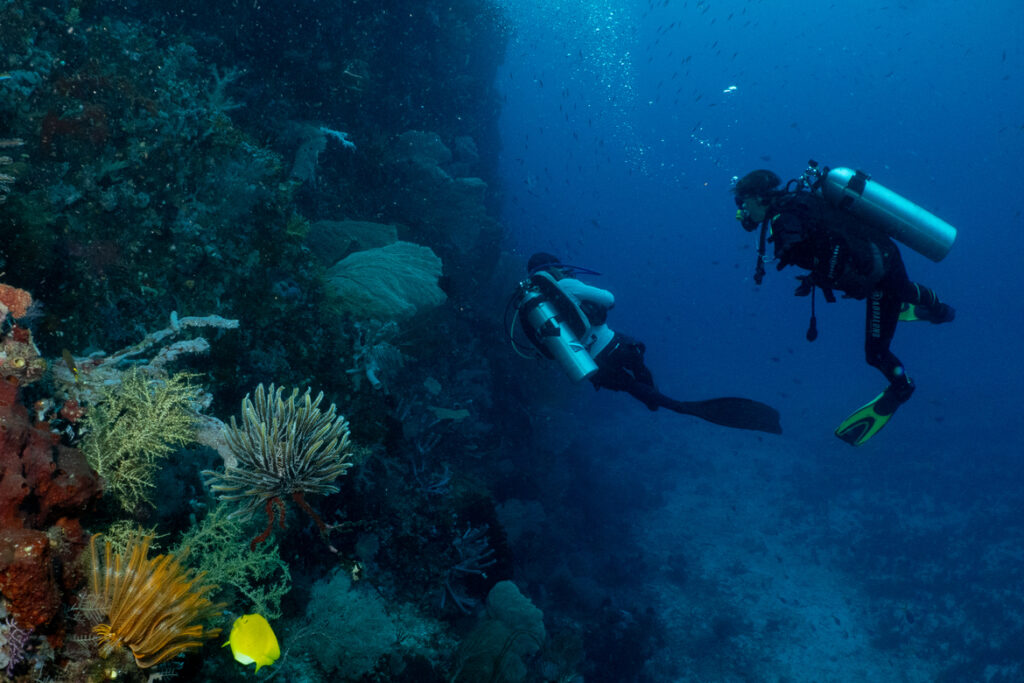
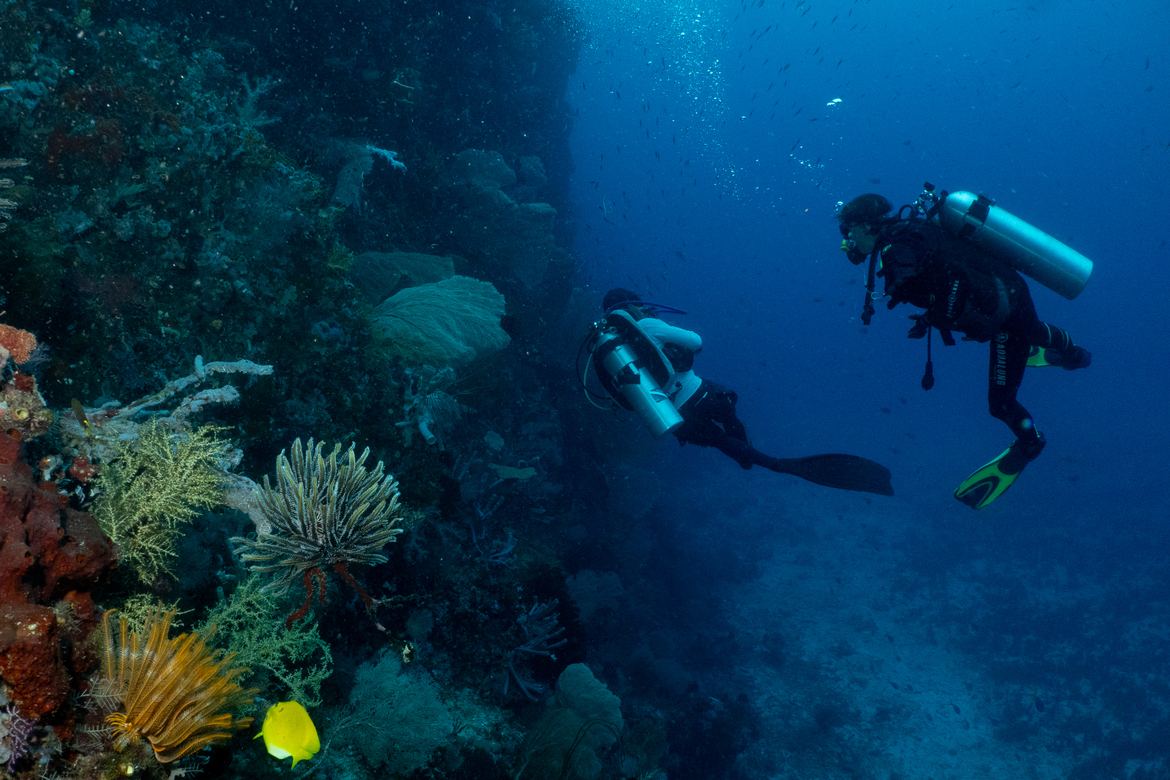
Sitting in the heart of the Coral Triangle, Indonesia is recognized as the global epicenter of marine biodiversity. According to WWF, this region boasts 75% of the world’s known coral species and supports the livelihoods of over 120 million people.
Because the archipelago spans over 5,000 kilometers from east to west, weather patterns and ocean currents are highly localized. For experienced divers and underwater photographers, seeking the best diving in Indonesia means experiencing the very pulse of the ocean.
When planning a trip for liveaboard diving Indonesia, choosing the right month and location is the difference between battling poor visibility and having the dive of a lifetime. Whether you are hunting for bizarre macro critters in muck diving capitals or drifting alongside pelagic giants in the open blue, planning your route around the seasons is crucial.
January – April: The Magic of Raja Ampat Diving
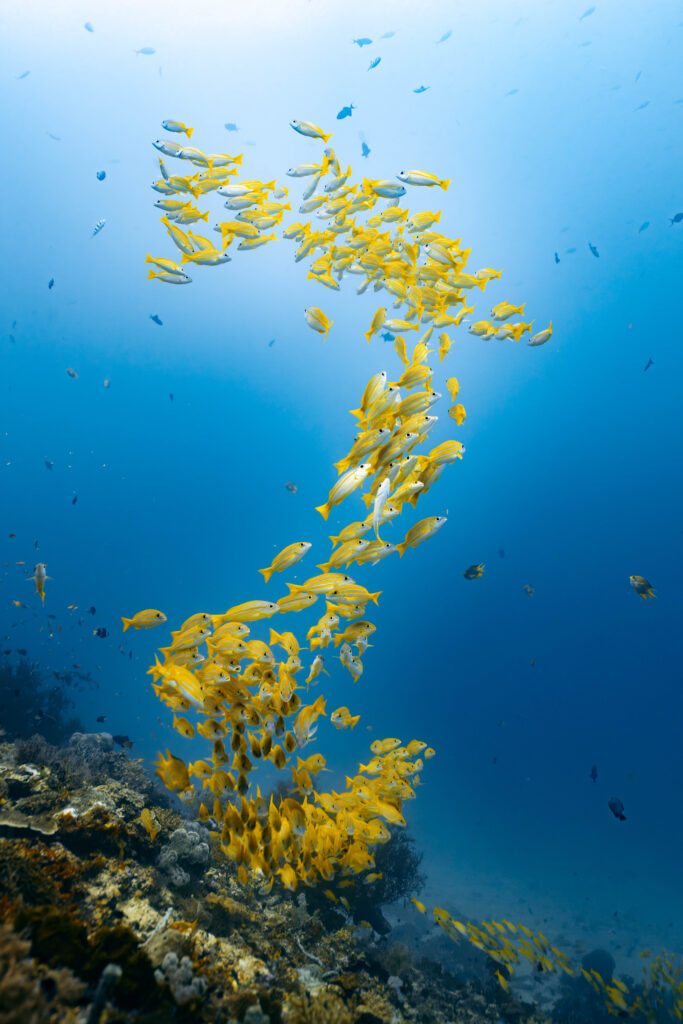
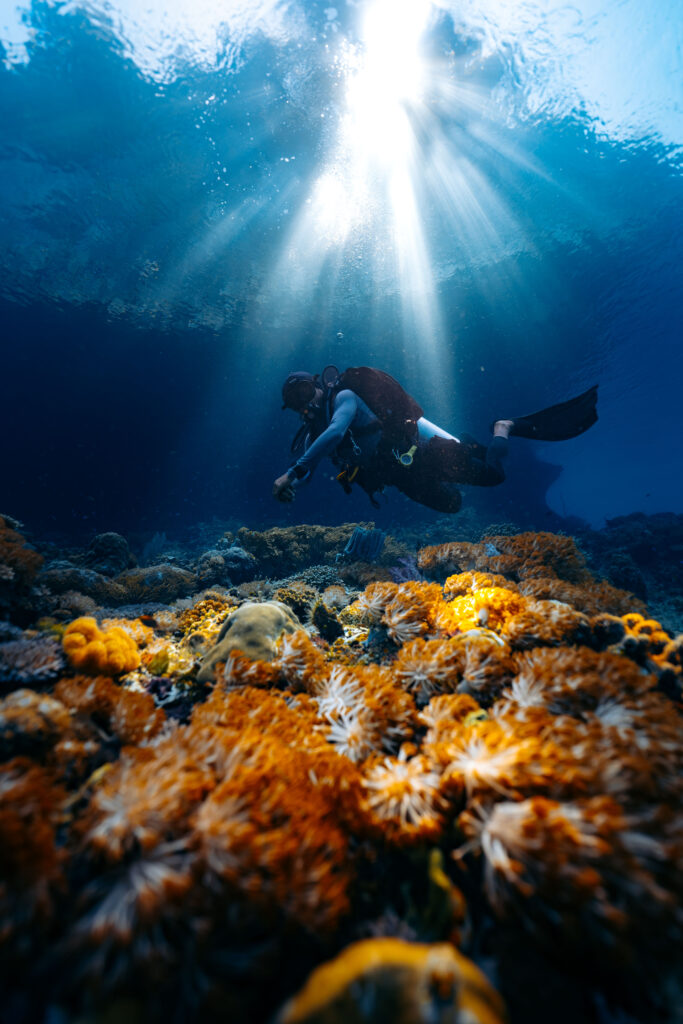
Raja Ampat is a mecca for divers worldwide. When it comes to Raja Ampat diving, you can expect dramatic karst limestone islands blanketed in dense jungle, surrounded by impossibly clear turquoise waters. The name translates to “Four Kings,” referring to its main islands: Misool, Salawati, Batanta, and Waigeo.
It is also surrounded by countless unpopulated smaller islands, giving you a private island vibe where you can spend the afternoon watching the sunset with a drink in your hand.
This window represents the dry season for West Papua, offering undoubtedly some of the best diving in Indonesia. The seas are remarkably calm, the skies are generally sunny, and underwater visibility routinely stretches beyond 25 to 30 meters.
Water temperatures remain a balmy 27–31°C (81-88°F), making a 3mm wetsuit, or even just a rash guard, perfectly comfortable. Because Raja Ampat sits at the critical junction of the Pacific and Indian Oceans, the nutrient-rich tidal exchanges create powerful, sometimes unpredictable drift currents. What You Will See:
1. Manta Ray

Encounter massive aggregations of both Oceanic and Reef Manta Rays at cleaning stations like Blue Magic and Magic Mountain. According to the Marine Megafauna Foundation and WWF, the population here is thriving, thanks to the establishment of the Southeast Asia’s first shark and ray sanctuary in 2012.
2. Tasselled Wobbegong Sharks
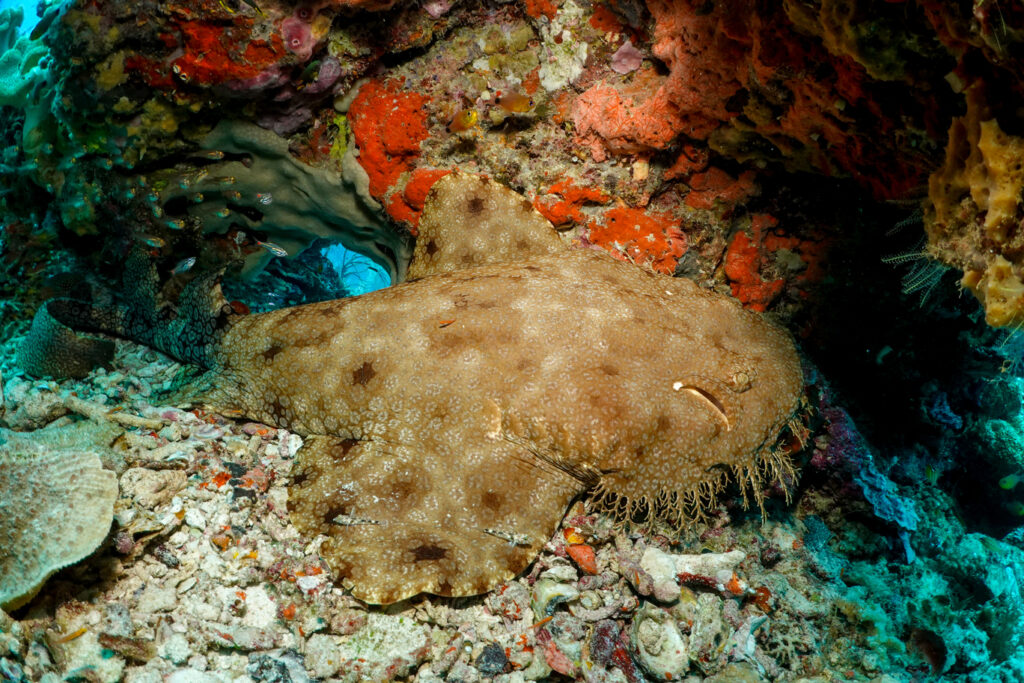
Found primarily in the central and northern areas, these bottom-dwelling ambush predators look like a rug with teeth. Their flattened bodies and fringe-like dermal lobes around their mouths allow them to blend seamlessly into the coral rubble, waiting to snap up passing teleost fishes.
3. Pygmy Seahorse
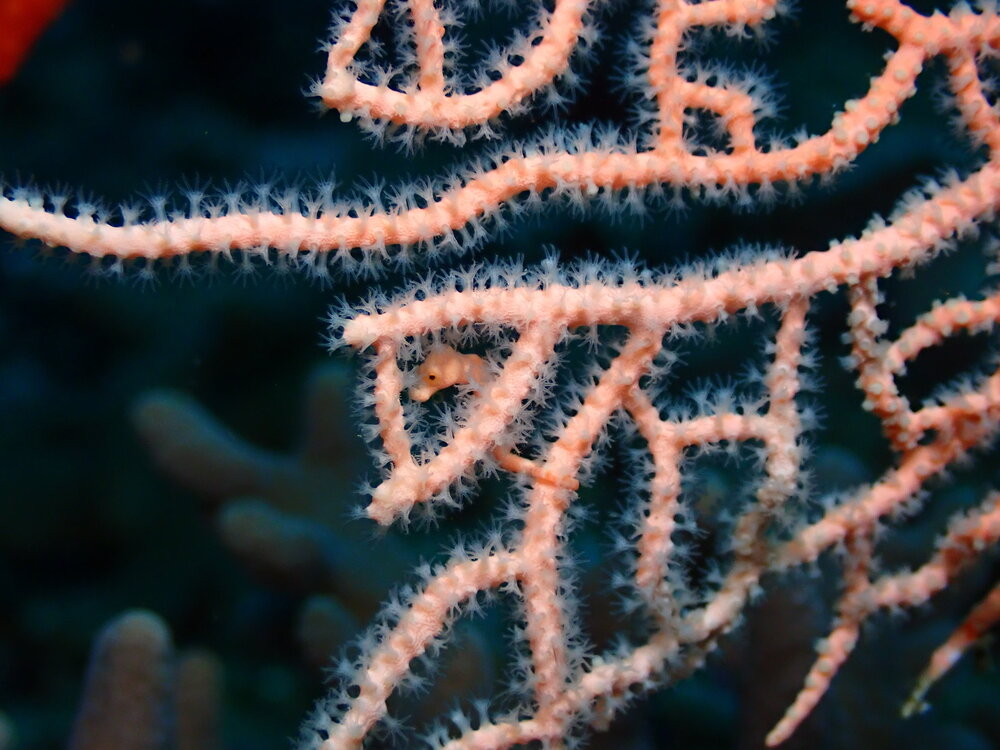
In the southern regions like Misool, macro enthusiasts can hunt for the Pygmy Seahorse. Measuring a maximum of 2.7 centimeters, they spend their entire lives anchored to a single Muricella gorgonian sea fan.
They have evolved such extreme camouflage that their bodies mimic the exact color and bulbous polyps of their host coral.
4. Nudibranch
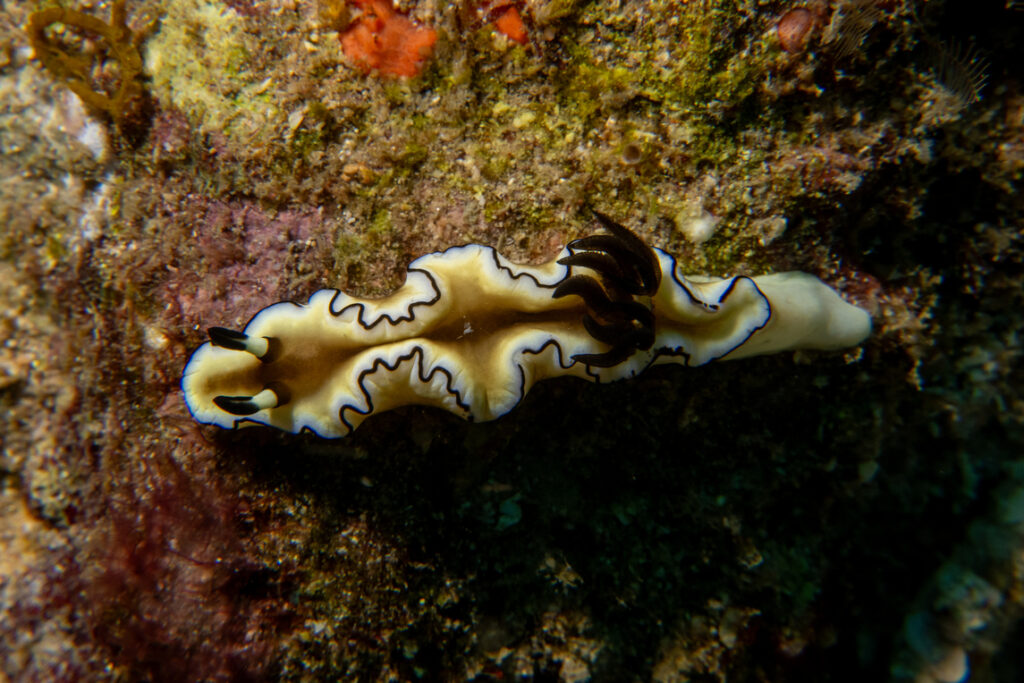
Indonesia is home to more than 1000 nudibranch species that spread from Bali to Raja Ampat. One of the popular diving spots to see this unique creature is Nudi Rock, which located in Misool Island.
5. Lake Jellyfish
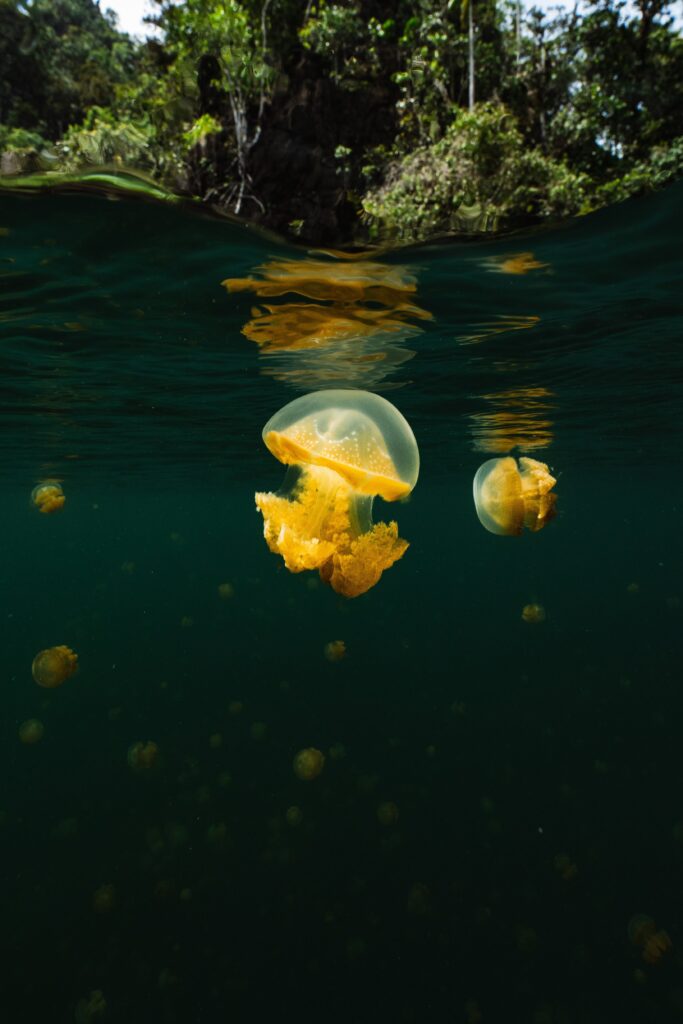
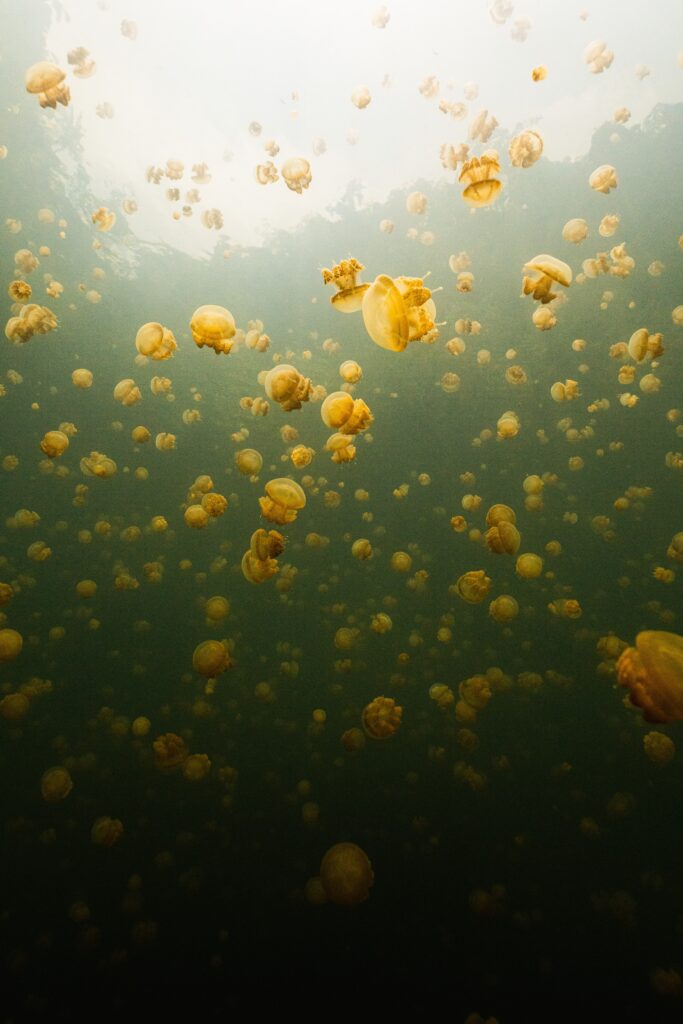
While there are several places to encounter unique lake jellyfish, the most famous is Lenmakana Lake on Misool Island, home to thousands of harmless, stingless jellyfish. Gam Island is another popular destination, featuring a hidden marine lagoon where visitors can find an isolated jellyfish population.
Finally, Karawapop Island offers another highly scenic, landlocked lake filled with these gentle creatures.
6. Ray Shark
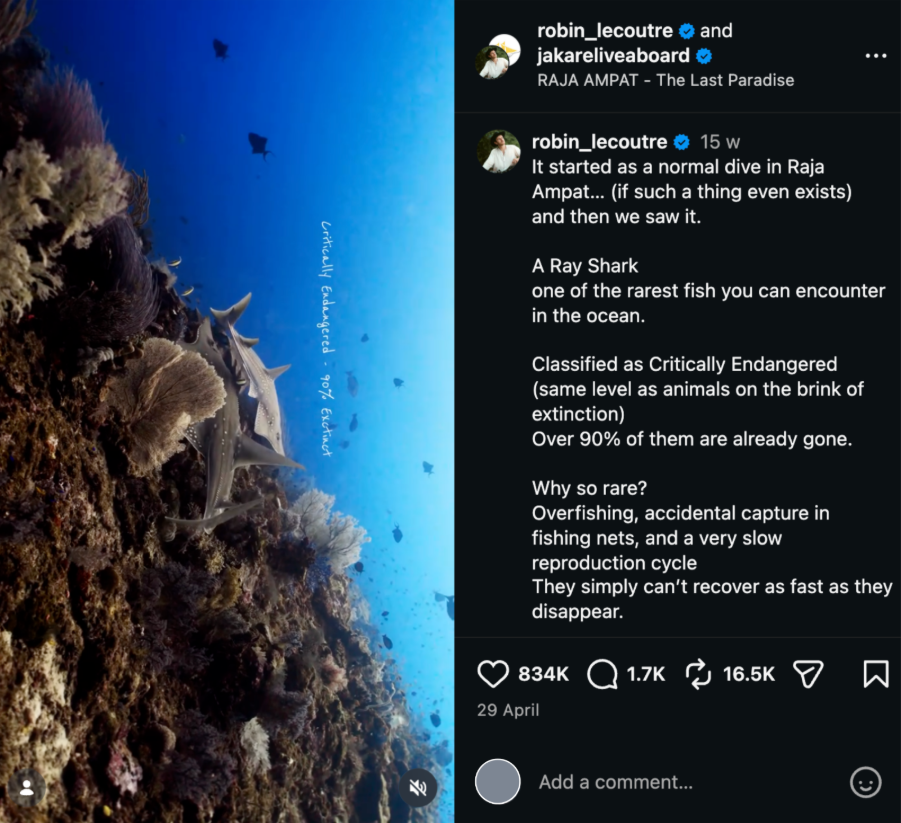
During our trip to Raja Ampat, our guest Robin Lecoutre had an incredible highlight: spotting a rare ray shark gliding through the reef! Because this is one of Raja Ampat’s most elusive pelagic encounters, Robin was understandably thrilled.
While this region boasts incredible marine life, unpredictable sea conditions mean sightings like this are never guaranteed, making it a truly magical moment for divers on Jakare Liveaboard. Head over to @robin_lecoutre on Instagram to see more of this amazing species!
July – September: Diving in Komodo Island and Sumbawa
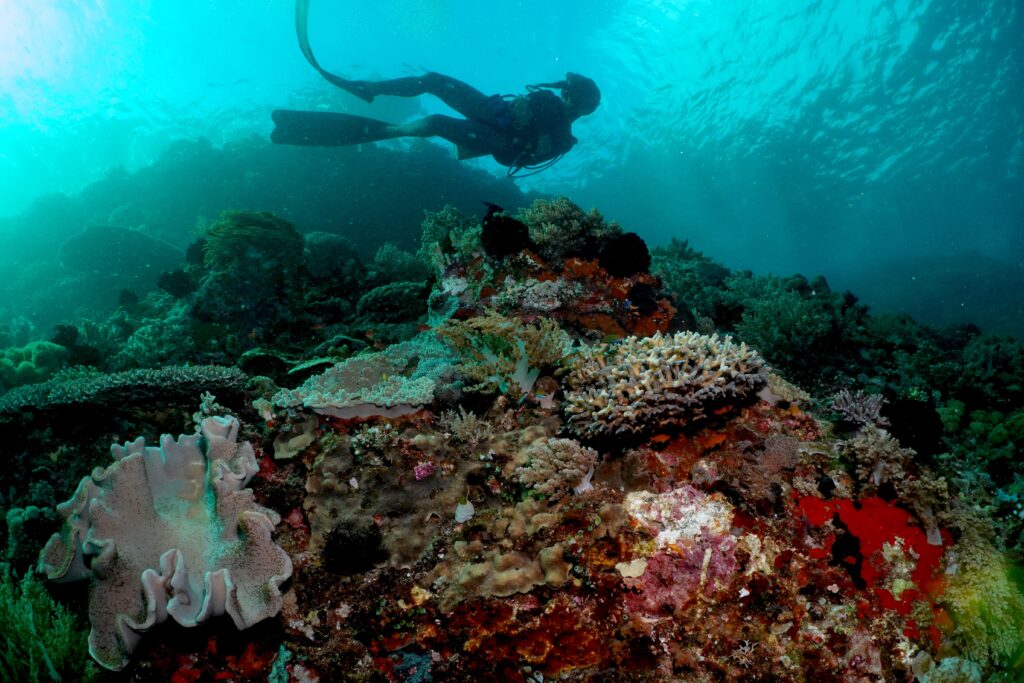
This window marks the peak dry season and is the ideal time to explore Sumbawa, Komodo, and the surrounding areas. The landscape will turn into a golden savannah, and the water will be crystal clear, making it perfect for open-water activities.
For those passionate about diving in Komodo island, liveaboard operators like Jakare often offer unhurried, slower-paced round-trip itineraries between Sumbawa and Komodo.
The Indonesian Throughflow funnels through narrow straits, creating cold-water upwellings in the Southern part of the park. Temperatures can drop into the low 20-24s Celsius (70-74°F), particularly in the southern dive sites, so a 5mm wetsuit and a hood are highly recommended. However the temperatures stay comfortable in the northern part of the park regulated around 28s Celsius
These upwellings bring staggering amounts of plankton to the surface, proving exactly why this region offers the best diving in Indonesia for pelagic lovers. What You Will See:
1. Sea Turtles
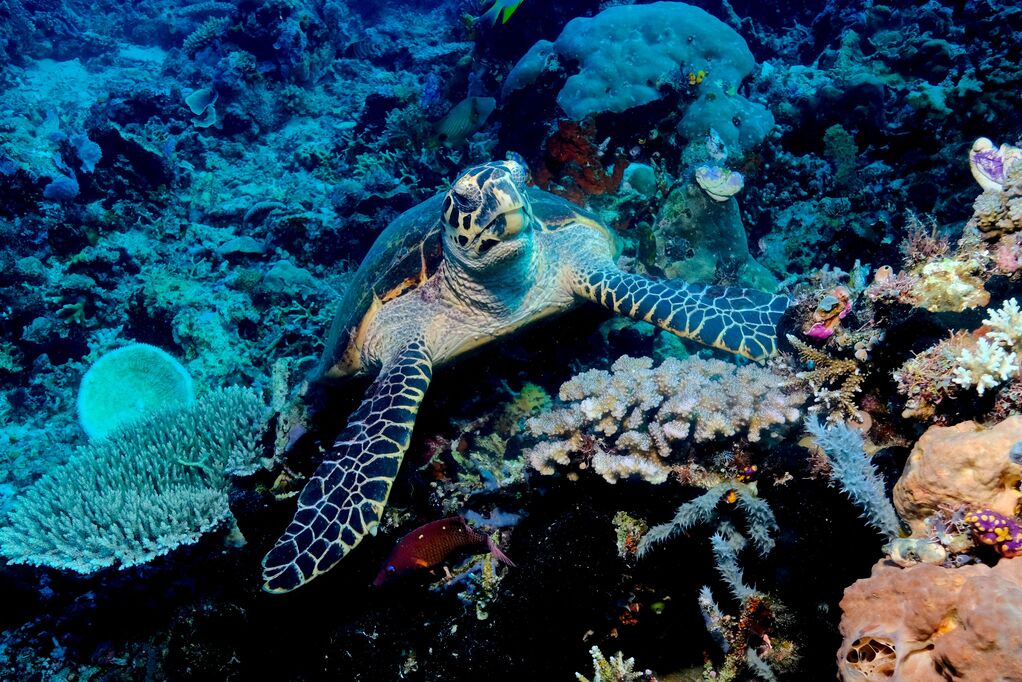
Komodo National Park is heavily patrolled and protected, a success story often highlighted by Greenpeace and local NGOs. The heavily protected coral reefs are sanctuaries for massive populations of Green and Hawksbill Sea Turtles.
2. Black-Tip Reef Shark
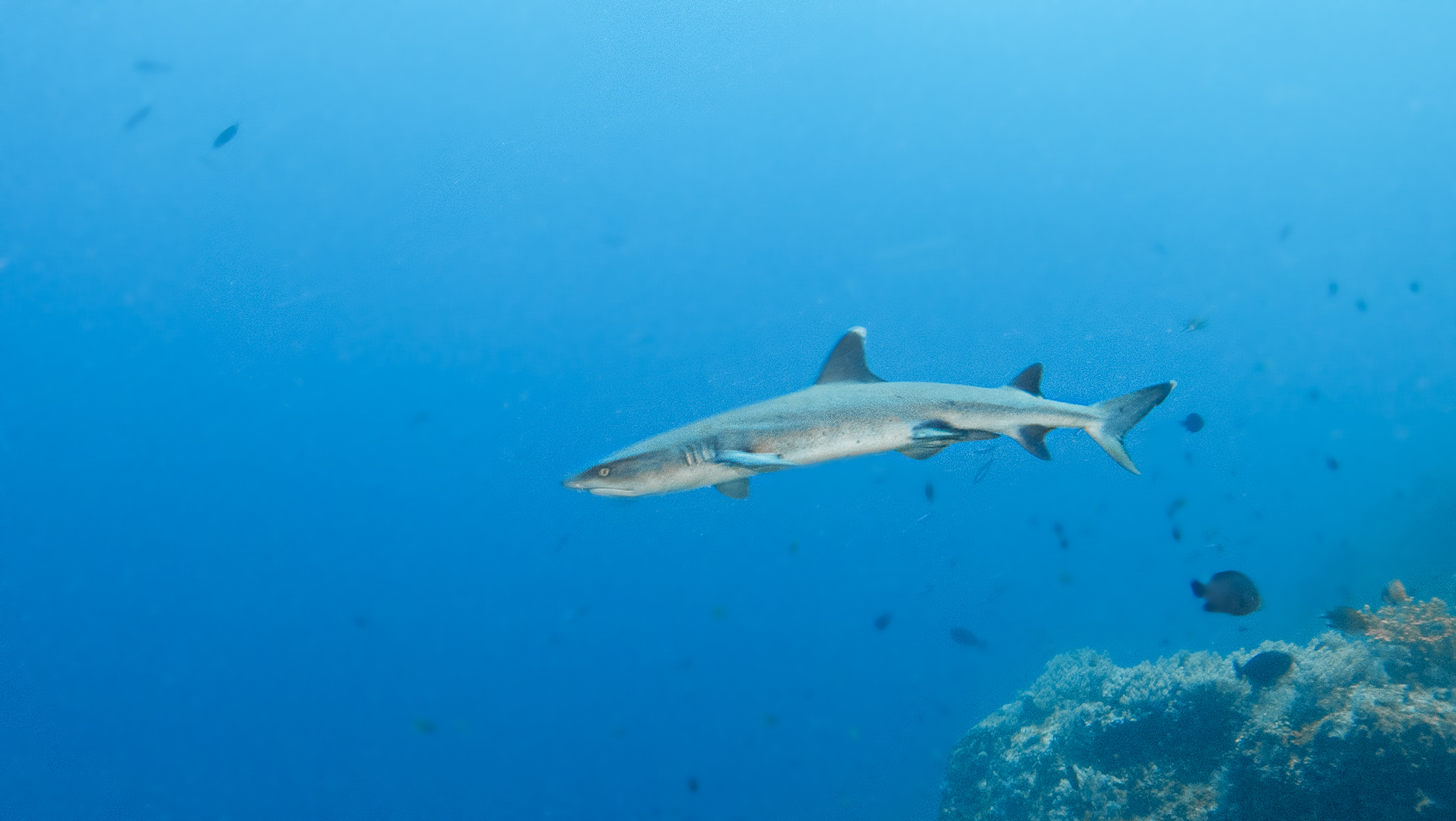
Drawn by Komodo’s diverse marine ecosystem and abundant small fish, blacktip reef sharks are a common sight cruising the shallow coral reefs and lagoons throughout the national park.
You can frequently spot these distinctly marked sharks while diving or snorkeling at popular sites like Castle Rock, Tatawa Besar, and Karang Makassar. Naturally timid and skittish around humans, they pose no threat, offering underwater explorers a thrilling yet perfectly safe encounter.
3. Whale Sharks in Sumbawa
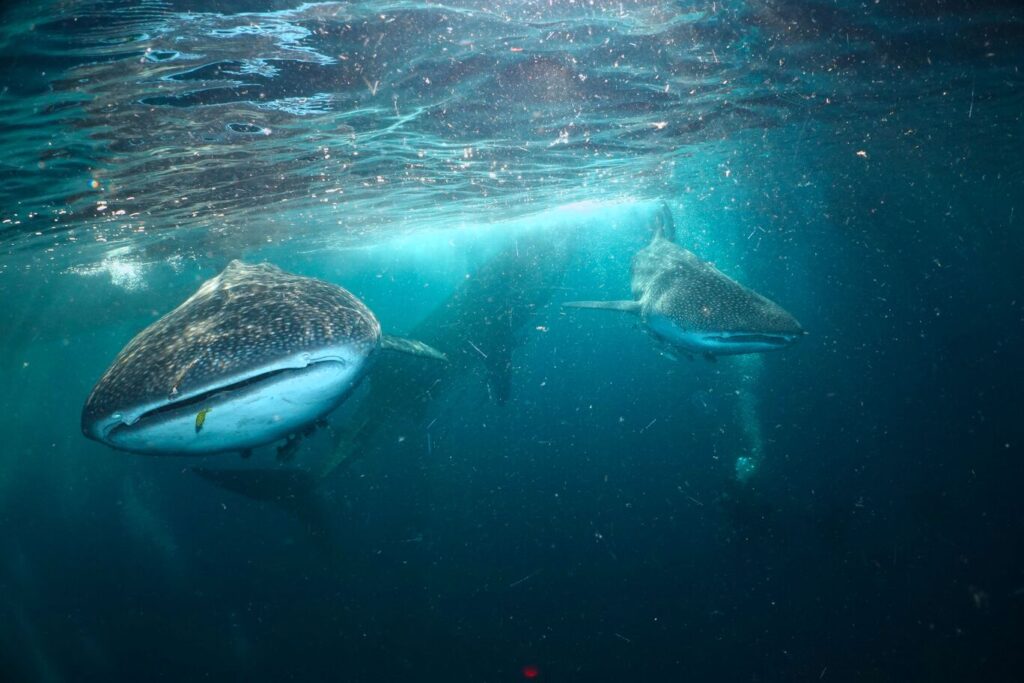
Teluk Saleh (Saleh Bay) in Sumbawa has recently gained global recognition as an ethical, natural gathering point for Whale Sharks. As reported by Mongabay, local communities have partnered with conservationists to protect these giants.
The sharks gather near traditional floating fishing platforms (bagans) to feed on small silversides and anchovies. Plunging into the water at dawn to snorkel alongside a 10-meter filter feeder is a deeply humbling experience.
October – Early November: Ambon and Banda Sea Diving
When October arrives, the transition between dry to wet seasons dictate a move to the historic Maluku Islands. Here, the focus shifts to calm Banda Sea diving and exploring Ambon Bay, celebrated globally as a premier “muck diving” destination.
Muck diving involves exploring seemingly barren sandy or volcanic rubble bottoms. These environments force marine life to develop extreme survival adaptations, resulting in the rarest macro life on the planet.
Visibility hovers around 10 to 15 meters, which is ideal for using dive lights to focus on the tiny subjects hiding in the sand. For wide-angle lovers, this route remains a must-do for experiencing the best diving in Indonesia. What You Will See:
1. Scalloped Hammerheads
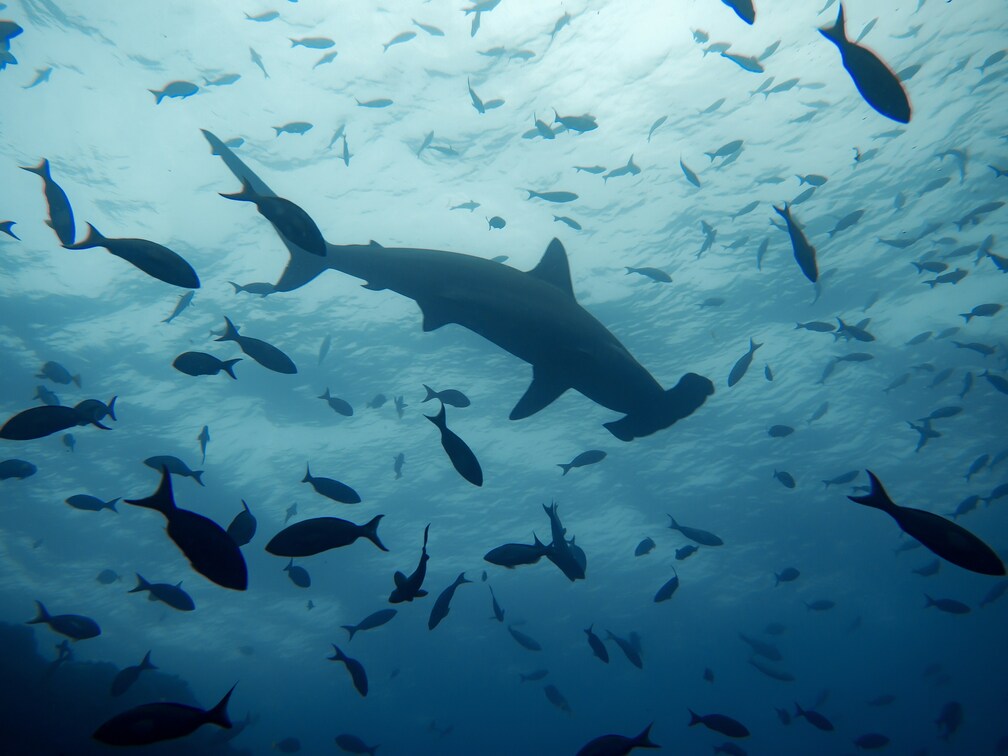
The ultimate prize of thrilling Banda Sea Diving is the hammerhead encounter. The cold thermoclines that sit between 15 and 30 meters draw massive schools of Scalloped Hammerhead Sharks up from the depths.
Around remote outposts like Nilu, Damar, and Pulau Koon, divers hook into the reef edge to watch walls of these shy, strangely shaped predators glide through the blue. Encounter rates during this specific seasonal window often hit 70-90%.
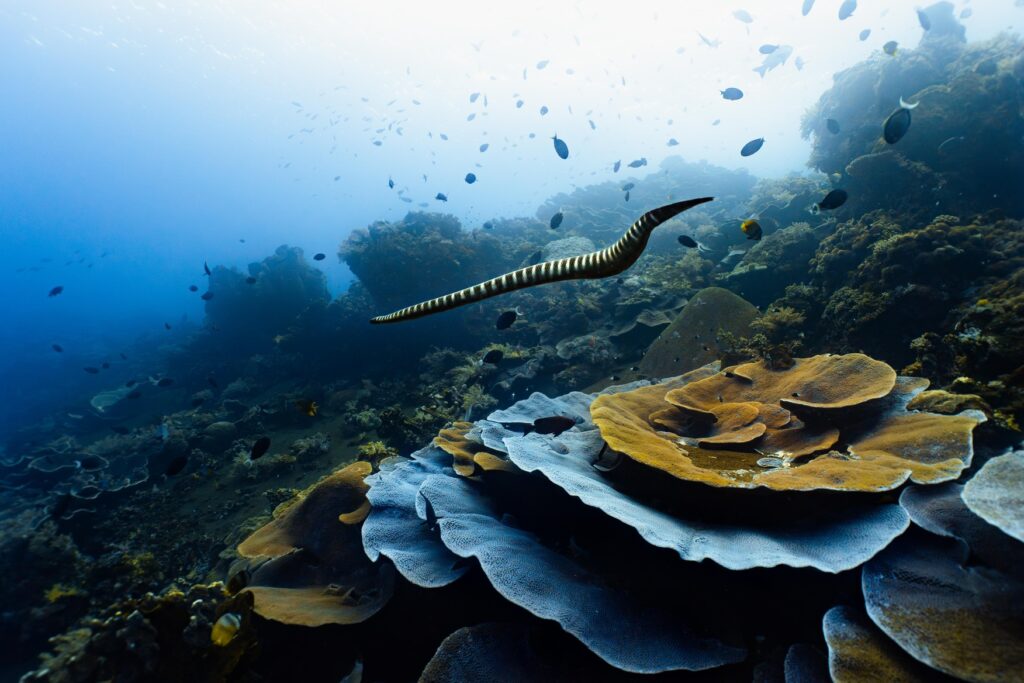
2. Sea Snakes of Gunung Api
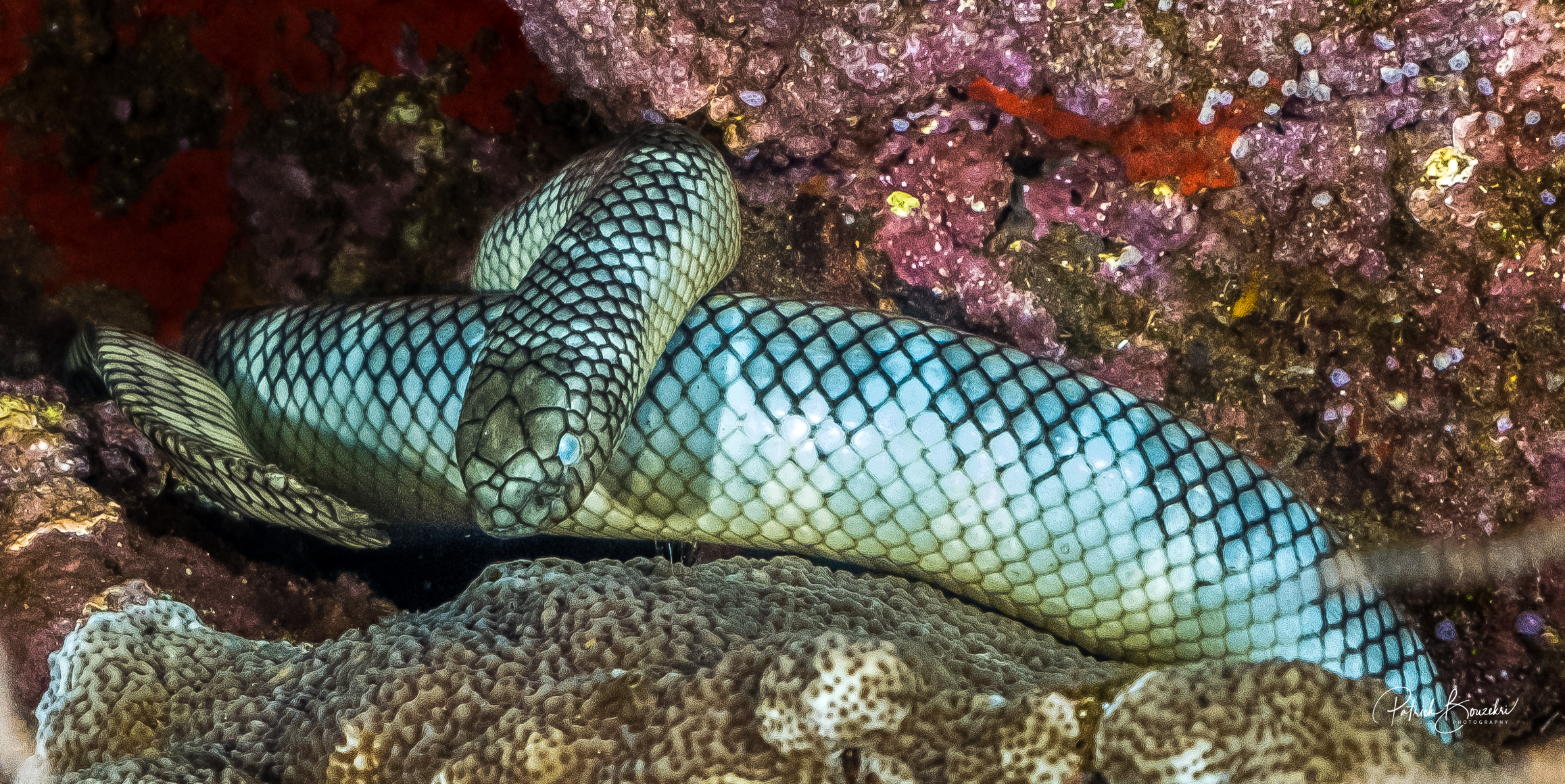
Gunung Api (translating simply to “Fire Mountain”) is an active volcano rising dramatically from the ocean floor. It is also known as “Sea Snake Island.” The geothermal activity and nutrient-rich waters support an unusually dense population of Olive Sea Snakes and Banded Sea Kraits.
It is common to see dozens, sometimes hundreds, of these highly venomous (but generally docile) snakes weaving through the stunning coral gardens that have regenerated on ancient lava flows.
3. Frogfish
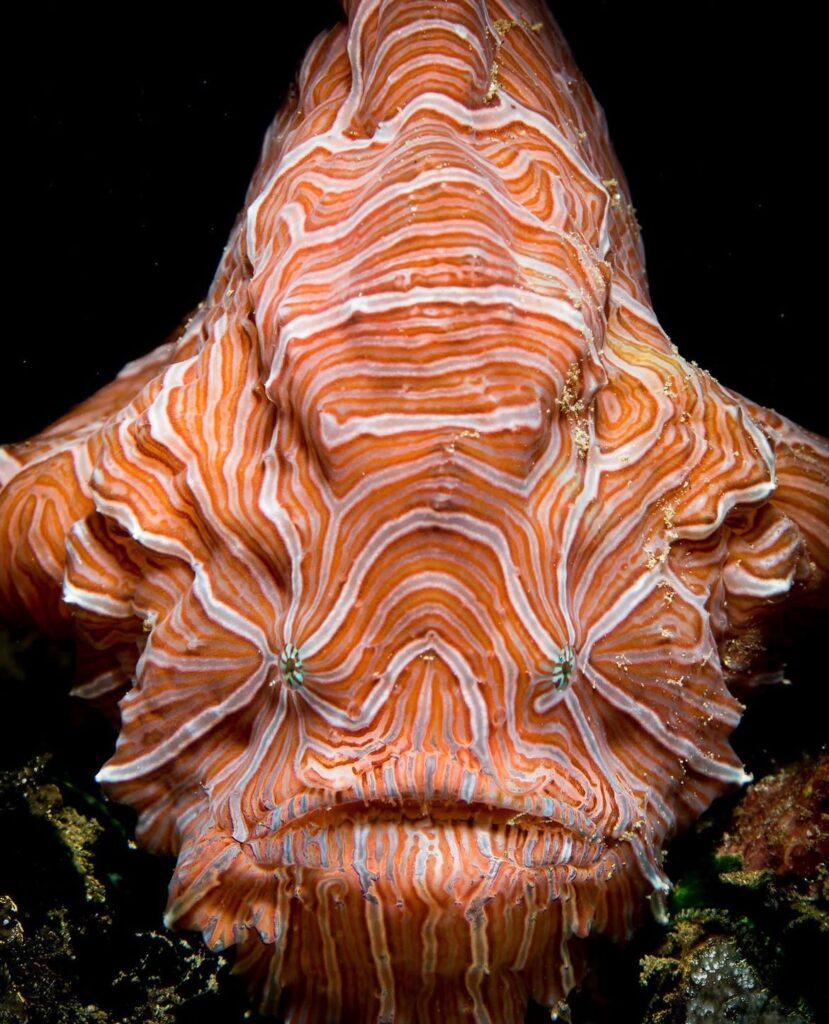
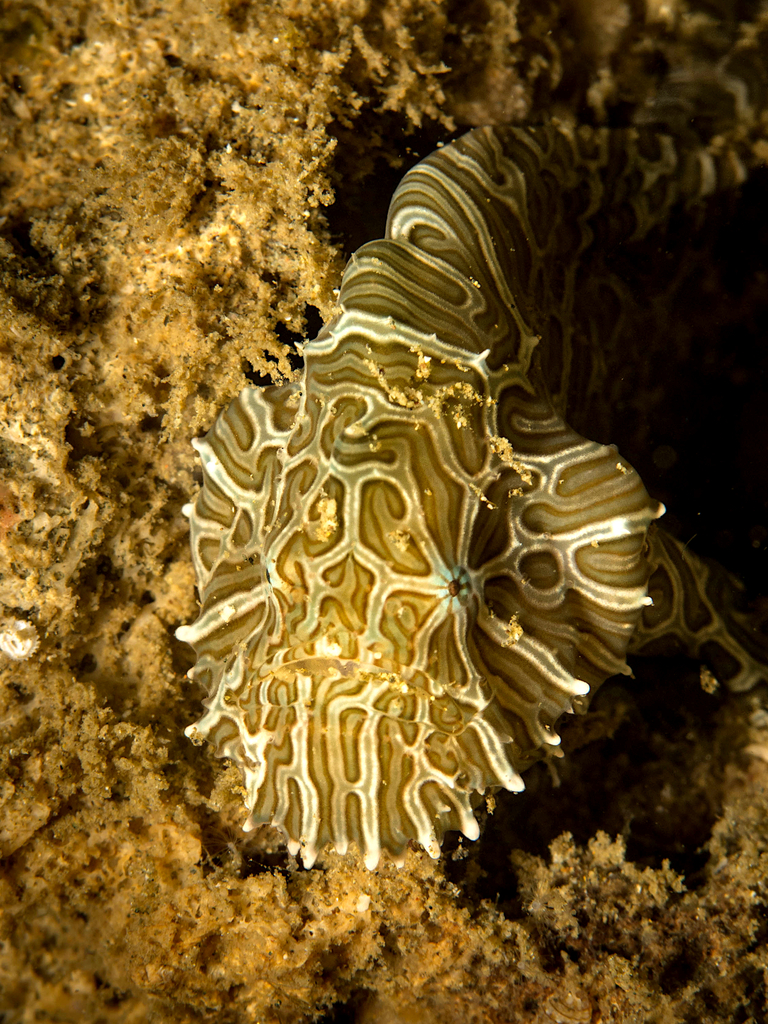
Found exclusively in the waters of Ambon Bay, it has a gelatinous body covered in a swirling, fingerprint-like pattern of peach and white stripes. It doesn’t swim; instead, it uses its modified pectoral fins to push off the seabed and “hop” across the volcanic rubble.
4. Cuttlefish
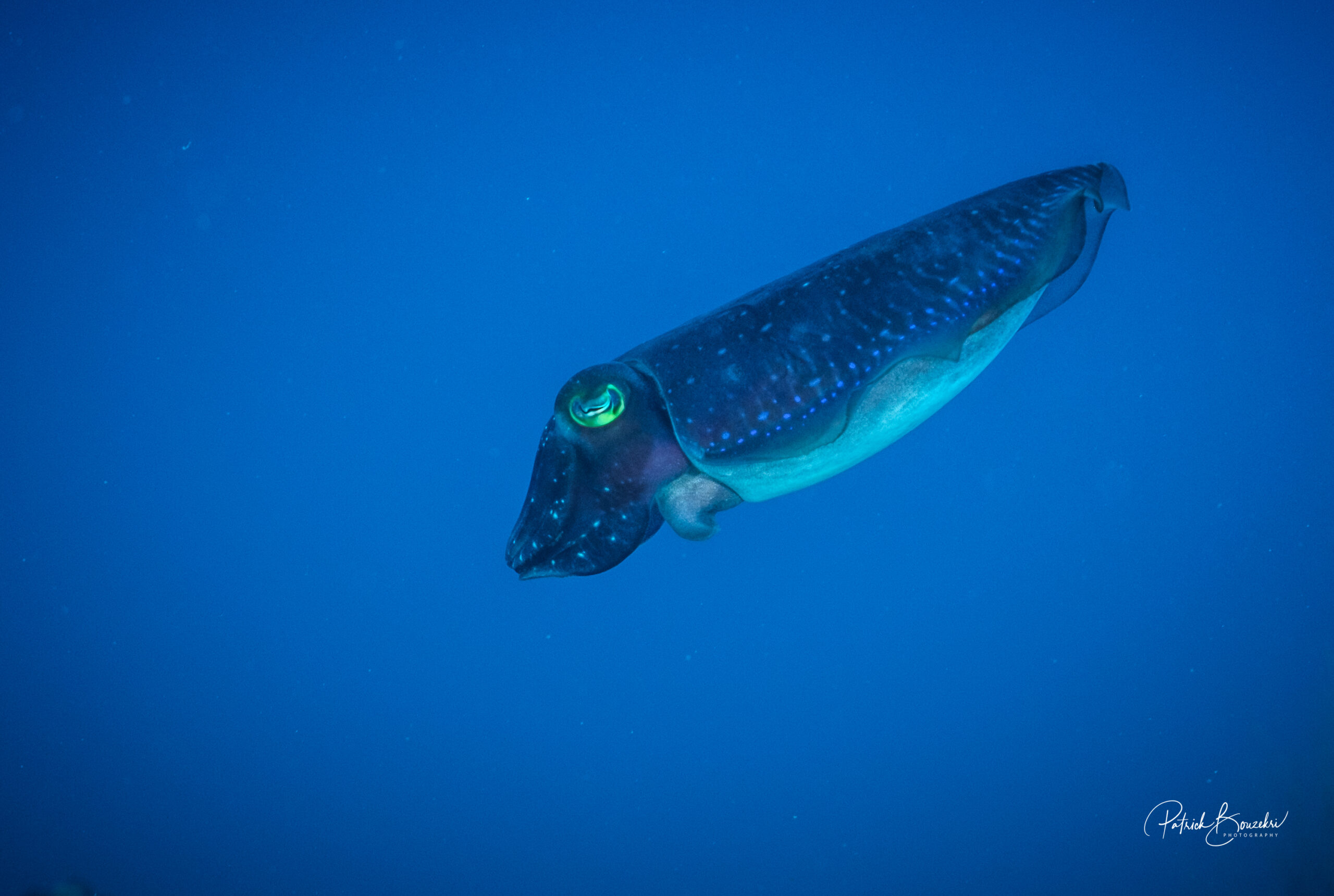
This is a tiny, highly toxic cephalopod. When threatened or hunting, it rapidly changes its skin color to display pulsating ripples of yellow, maroon, and brown to warn off predators. They can often be seen “walking” along the sandy bottom using their tentacles and mantle flaps.
5. Scorpionfish
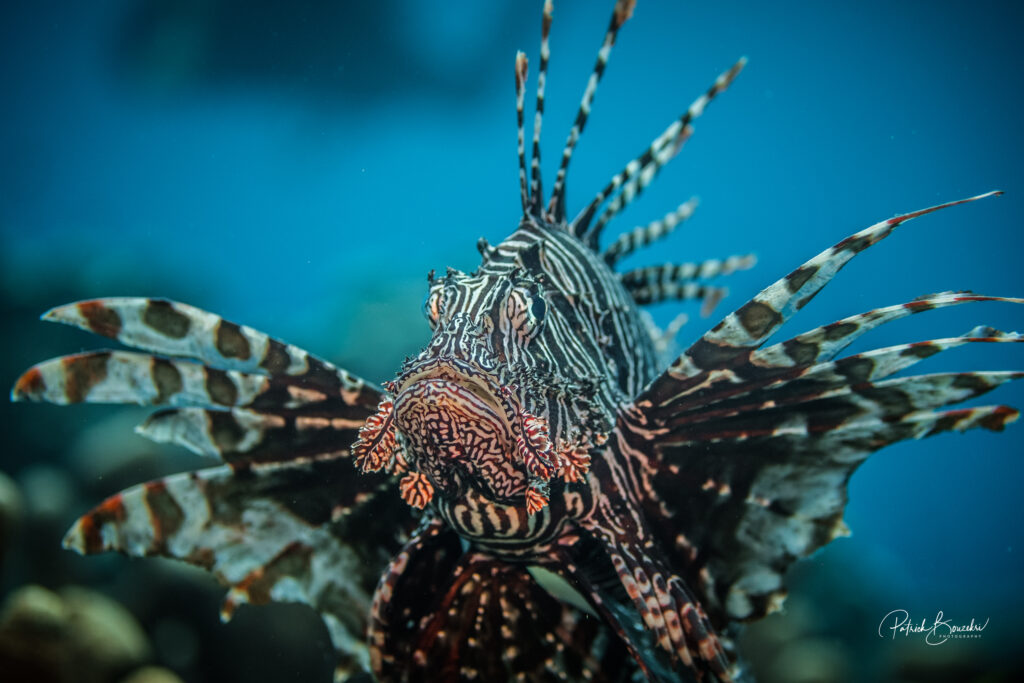
This marine-dwelling animal is known for its sharp, venom-coated spines and incredible camouflage, which allows it to blend in with rocks and coral reefs. It is primarily a sit-and-wait predator.
6. Pygmy Blue Whale
Robin Lecoutre’s luck didn’t end there. During our sailing journey to the Banda Sea, he also encountered this rare and unique Pygmy Blue Whale. Why are we so excited about this?
According to Greenpeace Australia, they are categorized as endangered, and sightings in the ocean are extremely rare. This subspecies is found across the Southern Hemisphere and the tropical Indian and southwestern Pacific oceans, so the Banda Sea isn’t its usual habitat.
However, as the ocean gets healthier, we might see more of them. If you want to see more of rare marine wildlife, you can also check Jakare Liveaboard Youtube.
Mid-November – December: Return to Raja Ampat Islands Diving
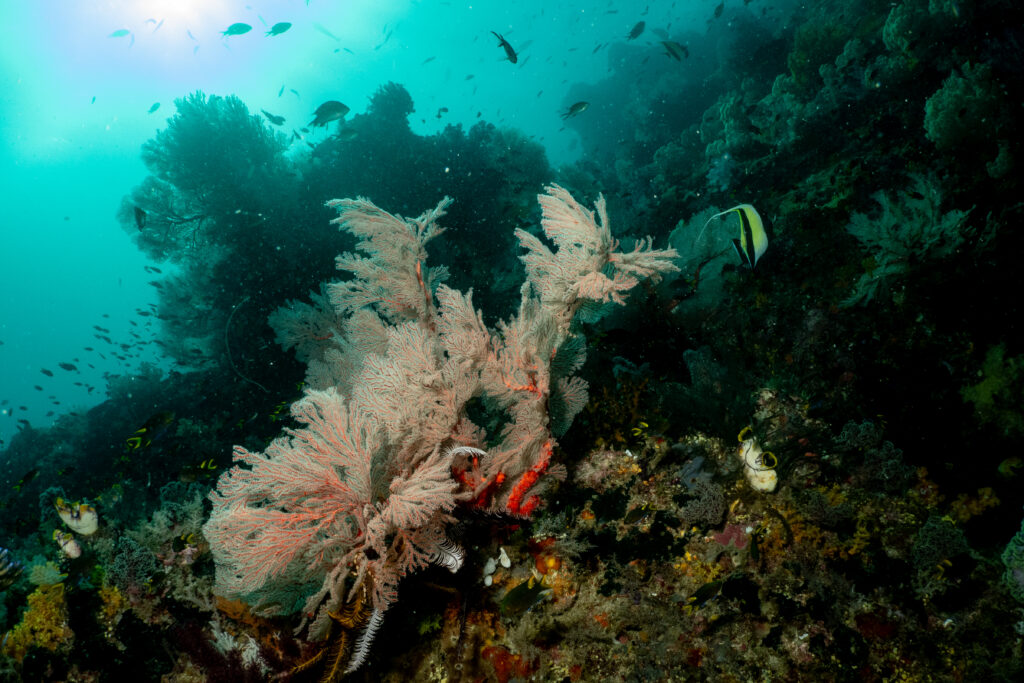
As the year comes to a close, the liveaboard fleet makes the journey back to West Papua. By mid-November, the northwest monsoon winds settle, and optimal conditions for diving in Raja Ampat return.
We less recommend visiting Raja Ampat in July and August. Even though it’s the peak of the dry season in the rest of Indonesia, this region has a unique climate that still brings daily rains, making it unsuitable for cruising.
You might face a few rain showers during your liveaboard in this window, but the water remains calm and warm, making it ideal for diving. The waters glass over, the visibility clears up, and the peak manta ray season kicks into high gear, making it an unforgettable experience once again.
What You Will See:
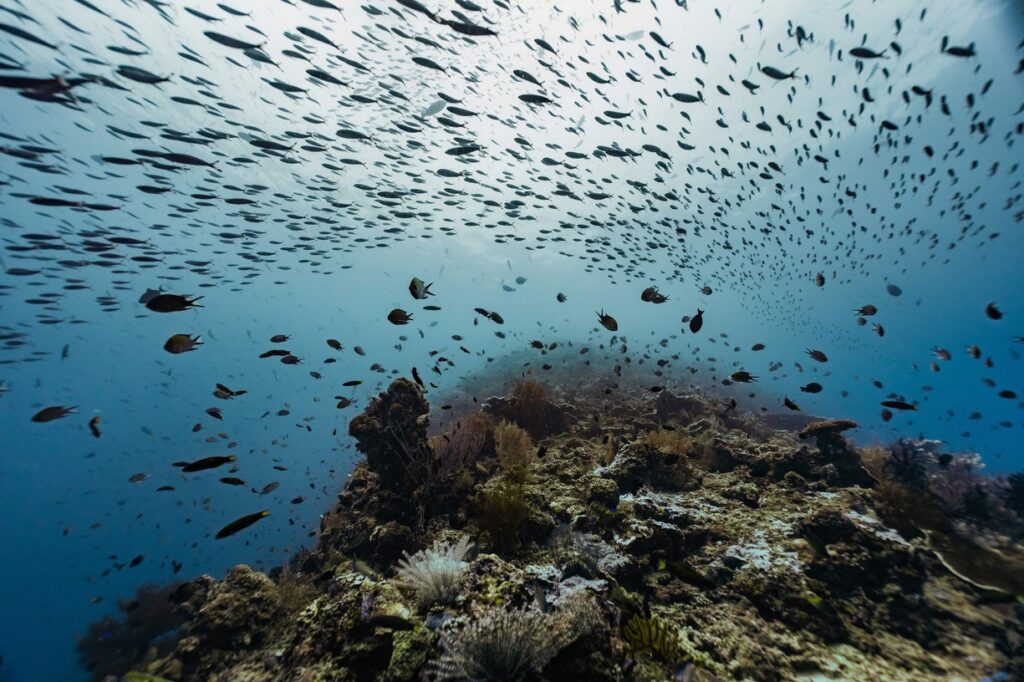
During this period, the nutrient-rich currents sweeping through the Dampier Strait draw massive aggregations of plankton-feeders. At famous dive sites like Cape Kri, which holds the world record for the most fish species recorded in a single dive by Dr. Gerry Allen, the water is thick with huge schools of sweetlips, barracuda, and trevally.
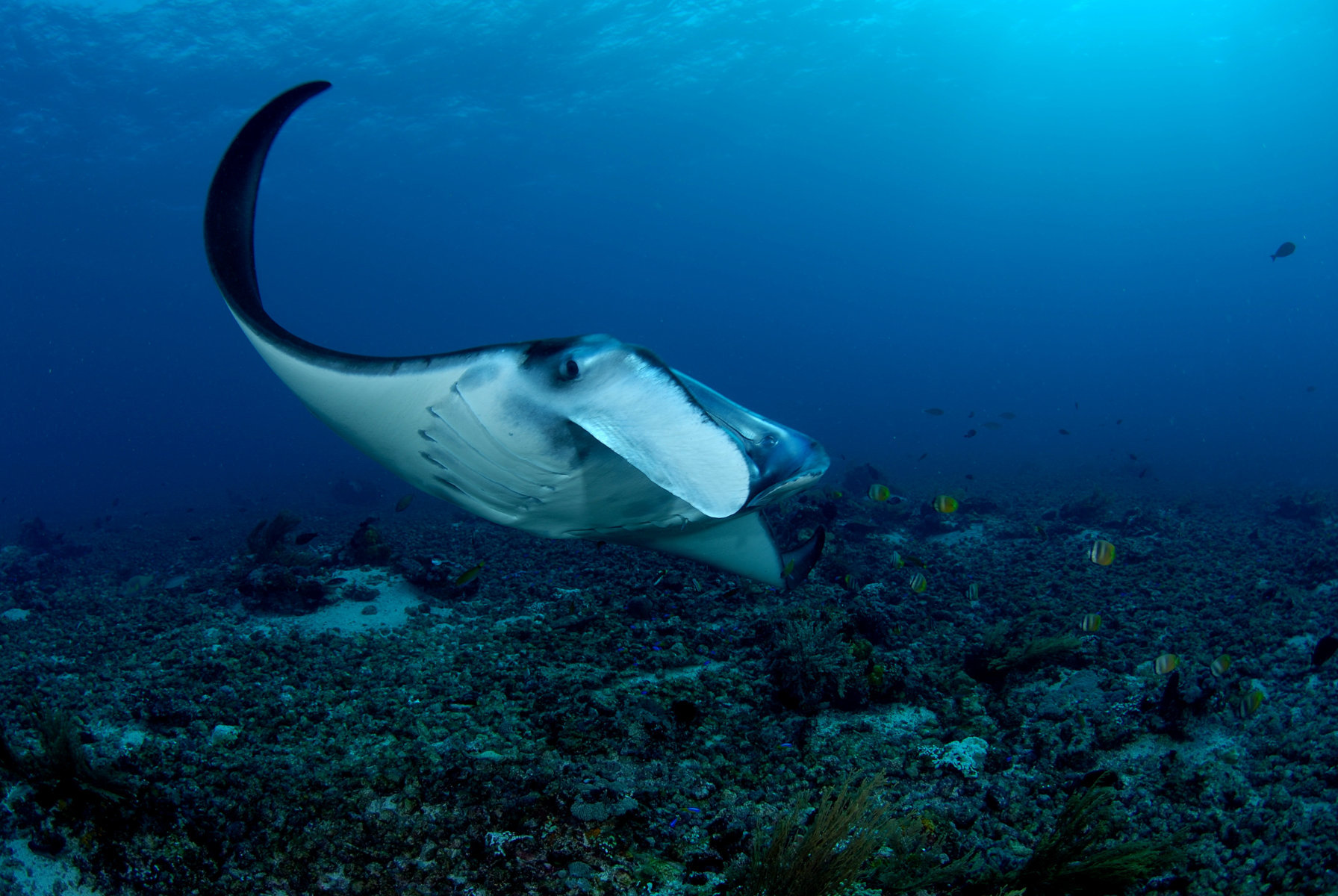
The reef mantas return in large numbers to hover over cleaning stations, where tiny wrasses pick parasites from their skin and gills. The reefs are densely populated with blacktip and whitetip reef sharks, while the bizarre wobbegong sharks once again ambush prey from beneath the colorful shelves of soft corals.
What To Pack for Indonesia Diving
Diving a frontier destination requires a bit more preparation than a standard tropical reef vacation. To ensure you are fully prepared for the dynamic conditions of Sumbawa, consider adding the following specialized gear to your packing list:
1. A Reef Hook & Surface Marker Buoy (SMB)
Essential for safely managing the strong currents at sites around Gili Banta and the Sape Strait. A reliable SMB is mandatory for safe pickups in open water after a drift dive.
2. Dual Camera Lenses
If you are an underwater photographer, you cannot afford to choose between a macro and a wide-angle setup. You will need a wide-angle dome for the whale sharks of Saleh Bay and the massive sea fans of Moyo, and a dedicated macro lens (such as a 60mm or 100mm) for the pygmy seahorses and Eviota samota on the volcanic sands of Sangeang.
3mm to 5mm Wetsuit (and Hood): While the surface temperatures in Indonesia are famously tropical, the deep water upwellings that bring the Mola Mola and blanket the reefs with nutrients can cause sharp thermoclines, dropping water temperatures from a balmy 28°C down to a chilly 22°C. A 5mm suit or a layered 3mm with a hooded vest will keep you comfortable on long, multi-dive days.
3. Reef-Safe Sunscreen
Protecting the pristine coral ecosystems of the Lesser Sundas should be a top priority for every visitor. Ensure your sunscreen is completely devoid of oxybenzone and octinoxate.
The Importance of Sustainable Liveaboard Diving
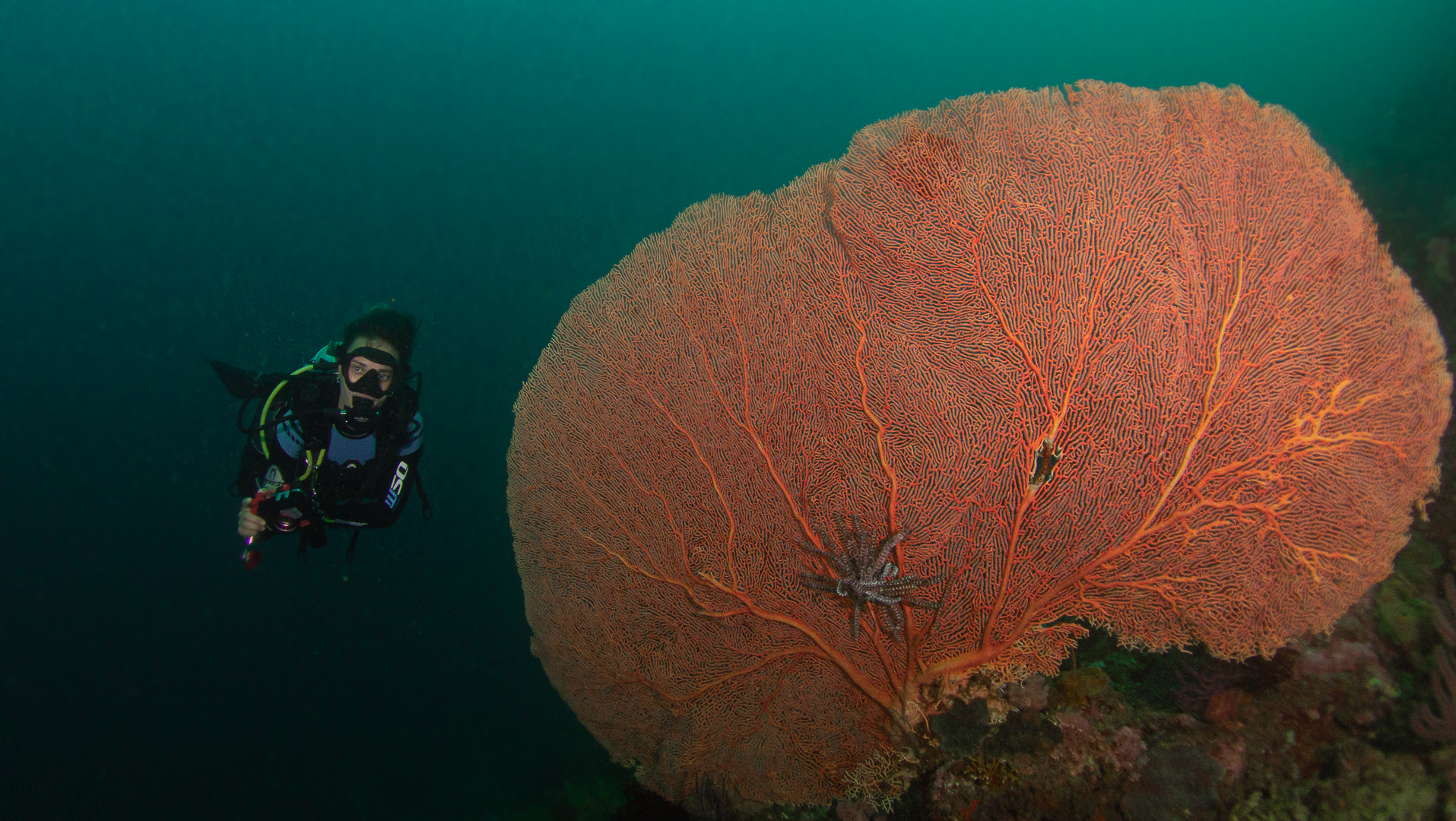
Navigating remote waters on your liveaboard diving in Indonesia requires an operator dedicated to minimizing their environmental footprint. The Coral Triangle is resilient, but it faces threats from climate change and pollution.
By understanding the seasonal shifts and the delicate ecosystems, you transform from a casual tourist into an informed ocean advocate.
Ready to jump into the best diving in Indonesia? Secure your spot on the Jakare today and immerse yourself in the pristine waters of the Coral Triangle. Whether you want to drift with mantas in Raja Ampat, hunt for macro critters in Ambon, or dive with hammerheads in the Banda Sea, our crew is ready to guide you on a sustainable and memorable journey through the archipelago.
Frequently Asked Questions
1. Can you dive with hammerheads in the Banda Sea?
Yes, the Banda Sea is famous for diving with large schools of scalloped hammerhead sharks. The best chances to see them are during the transitional seasons around April to May and September to October. During these months, cooler thermoclines rise toward the surface, bringing these magnificent predators within recreational diving depths.
2. When is the best time for Raja Ampat diving?
The optimal time to dive in Raja Ampat is during the dry season from October to April. This window offers the most favorable conditions, featuring calmer seas, minimal rain, and excellent underwater visibility. However, the region lacks a true off-season, meaning year-round diving is entirely possible in these warm, tropical waters.
3. Where can you see manta rays in Raja Ampat?
The Dampier Strait is one of the most famous and reliable areas for spotting manta rays in Raja Ampat. Specific dive sites like Manta Ridge act as bustling cleaning stations where both reef and oceanic mantas gather in large numbers. The strong, nutrient-rich currents in this central region attract the plankton that these majestic creatures feed on.
4. Is Komodo good for snorkeling?
Yes, Komodo National Park offers world-class snorkeling experiences that rival its famous scuba diving. Snorkelers can easily explore shallow, vibrant coral gardens and encounter marine megafauna without needing specialized dive gear. Famous spots like Karang Makassar and Siaba Besar allow you to float right above manta rays and sea turtles in their natural habitat.
Read More